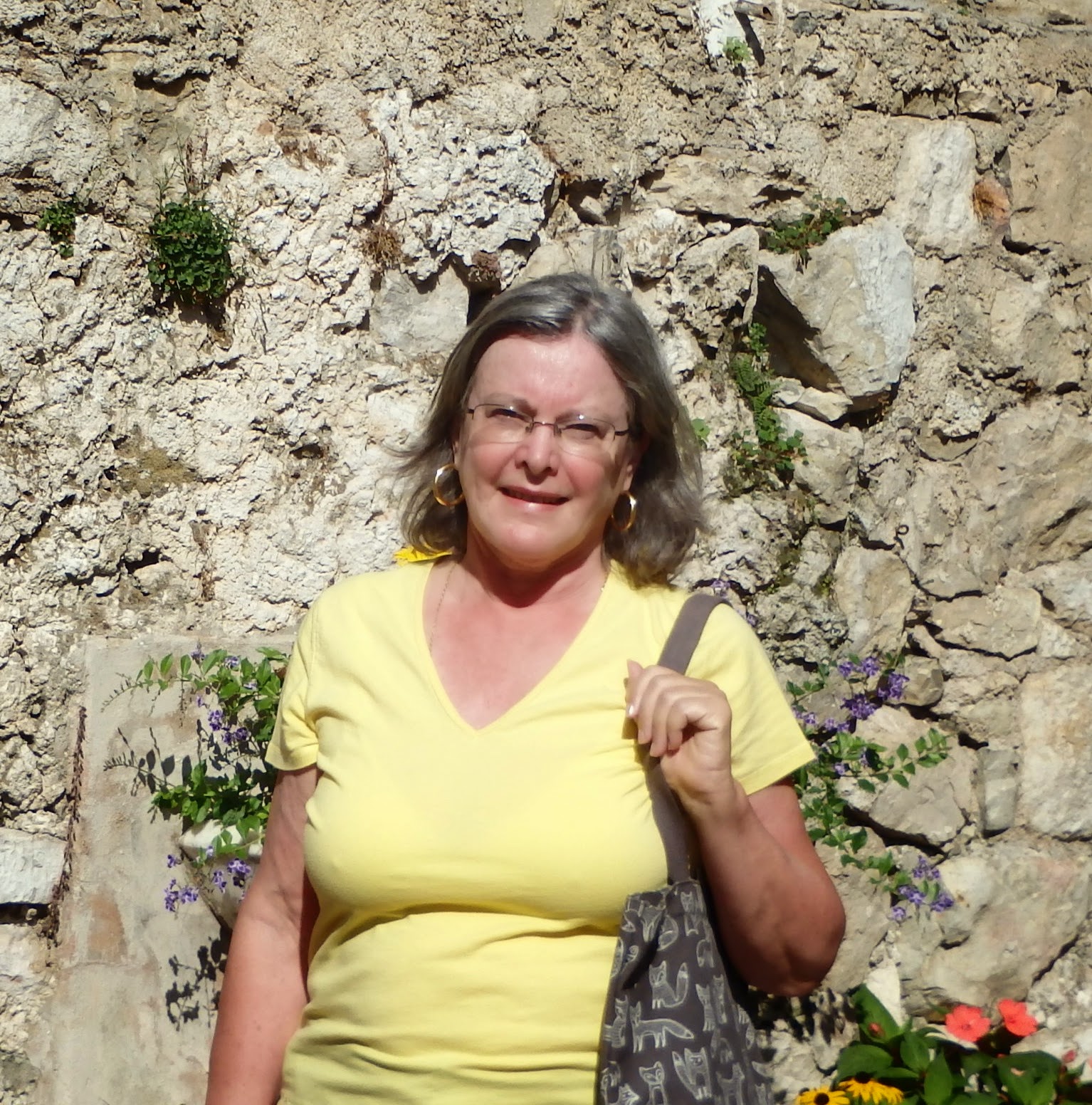
Okay, time for another writing question for our four authors. If you're new to this part of the blog, it all started last year when the four were on a panel at a Capital Crime Writing event. When their time was up, there were still plenty of questions left unasked. So, I've been working through them, one per month. We're almost at the end of the pile so, maybe I'll open it up to questions from the readers. Does that sounds like a good idea? You can respond on my Facebook page because I know it's sometimes hard to comment on this blog.
Here's the question this time around: How do sidekicks enhance a hero's character?
Barbara Fradkin:
The best characters are studies in contrast. Contrasting looks, style, interests, and personality all serve to make an interaction more vivid and dramatic, and increase the tension and impact of a scene. The most effective sidekicks provide an ongoing contrast and backdrop against which the character of the hero can stand out, and contribute to the push-pull of the scenes they share. Where the hero is whimsical, the sidekick is practical, where the hero is brilliant, the sidekick is befuddled, and so on… Sidekicks shouldn’t overshadow the hero, but serve as a foil against which the strength, bravery, or intelligence of the hero can shine.
Sidekicks enhance the hero’s character in other ways as well; by showing how they cope with friendship, closeness, loyalty in a relationship, and by acting as a sounding board for the hero’s doubts, ruminations, and deductive efforts throughout the story.
Mary Jane Maffini:
The right sidekick can complement the hero's character, speaking about him or her in a way the hero couldn't speak about her or himself. Sidekicks are great at getting the hero to engage in passionate conversation, revealing character with every sentence. Also (if picked with care) the sidekick can take care of some of the more mundane daily activities, leaving the hero free to be heroic. A sidekick can also do things necessary to solve the dire situation that the hero might not be willing to. Blow things up, for instance, or steal cars. I am speaking of my own wicked sidekicks here, not of my blushingly well-behaved heroes.
R.J. HARLICK:
Sidekicks are fun. They add dimension to the main protagonist. They can also be a counterbalance. While sidekicks don’t usually share the same personality traits as the main protagonist, their personality will compliment that of the main protagonist. When writing with more than one POV, a sidekick can also provide another perspective of the story not shared by the main protagonist. They can also be used to convey information not known by the main protagonist. Often in a series with an amateur sleuth, the sidekick is a policeman or woman in order to provide the police procedural aspects in the solving of the murder. I think every good crime story needs an engaging sidekick or two.
Linda Wiken/Erika Chase:
You've heard the old adage about knowing a person by the friends they keep -- well, that's one big reason for choosing sidekicks with care. He/she or they can either enhance the protagonist's image or make a reader question whether or not they like this person enough to read on. They can be used to draw out the hero's ideas and views, to add contrast to scenes where the hero might need to be serious while the sidekick can add some humour, and to say things your hero really shouldn't be saying. These are secondary characters so that's the role they should always be playing. But the main thing is, everyone needs a friend, even our characters. Especially our characters.
Showing posts with label R.J. Harlick. Show all posts
Friday, March 13, 2015
Friday, January 23, 2015
CRIMINAL TENDENCIES
It's question time again and here's what our three mystery authors are answering today: Are female victims over-represented in fiction and if so, why?
MARY JANE MAFFINI:
I haven't done the math on this! However, I think it's possible because I think we may be more outraged by violence against women than men. Kids and animals are verboten. But a bigger concern is the graphic description of torture or sexual violence, quite aptly called 'torture porn'. It ratchets up our outrage. but is it serving another purpose and one which should make us think twice.
LINDA WIKEN:
My own feeling is that they are not over-represented. I think the fiction is mirroring what we read about and view in the media every day. Females are, generally speaking, more vulnerable in society. They therefore are prime candidates for the role of victim in fiction, as in life. I agree with MJ about the taboos surrounding children and animals, even though not all authors adhere to these. So, next in line are women. Members of minority groups are also on that continuum but are not as frequently portrayed as the victims in fiction.
R.J. HARLICK:
I can’t say I have ever noticed if too many victims are women. I might even suspect that more men get killed in crime novels, because they are the ones more likely be involved in violent situations.
Normally I don’t pay attention to gender distribution. But not long ago I found myself having to read a lot of mysteries, more so than usual. As I’m reading one book after another, it suddenly struck me that in many of them there was a much higher proportion of men in positions of authority or power than women. Most of the female characters were in supporting roles as wives, girlfriends, sidekicks, etc., with few taking on any significant role in the stories. Even the bad guys were more likely to be male than female. Now I did notice that this tendency seemed to be more apparent in books written by men than by women, but still many of the female writers were just as guilty.
So I asked myself why this would be the case and I’m afraid the only answer I could come up with was that the stories being written are essentially reflecting the real world. It also explains my inattention to gender distribution. I am just reading what I see happening around me on a day-to-day basis.
So my fellow writers maybe it is time we did something about it and add a little more gender equality into our writing. But you know what, even as I write this I am realizing that the majority of characters in my current book are male. Sheesh, you can’t win.
MARY JANE MAFFINI:
I haven't done the math on this! However, I think it's possible because I think we may be more outraged by violence against women than men. Kids and animals are verboten. But a bigger concern is the graphic description of torture or sexual violence, quite aptly called 'torture porn'. It ratchets up our outrage. but is it serving another purpose and one which should make us think twice.
LINDA WIKEN:
My own feeling is that they are not over-represented. I think the fiction is mirroring what we read about and view in the media every day. Females are, generally speaking, more vulnerable in society. They therefore are prime candidates for the role of victim in fiction, as in life. I agree with MJ about the taboos surrounding children and animals, even though not all authors adhere to these. So, next in line are women. Members of minority groups are also on that continuum but are not as frequently portrayed as the victims in fiction.
R.J. HARLICK:
I can’t say I have ever noticed if too many victims are women. I might even suspect that more men get killed in crime novels, because they are the ones more likely be involved in violent situations.
Normally I don’t pay attention to gender distribution. But not long ago I found myself having to read a lot of mysteries, more so than usual. As I’m reading one book after another, it suddenly struck me that in many of them there was a much higher proportion of men in positions of authority or power than women. Most of the female characters were in supporting roles as wives, girlfriends, sidekicks, etc., with few taking on any significant role in the stories. Even the bad guys were more likely to be male than female. Now I did notice that this tendency seemed to be more apparent in books written by men than by women, but still many of the female writers were just as guilty.
So I asked myself why this would be the case and I’m afraid the only answer I could come up with was that the stories being written are essentially reflecting the real world. It also explains my inattention to gender distribution. I am just reading what I see happening around me on a day-to-day basis.
So my fellow writers maybe it is time we did something about it and add a little more gender equality into our writing. But you know what, even as I write this I am realizing that the majority of characters in my current book are male. Sheesh, you can’t win.
Friday, December 12, 2014
CRIMINAL TENDENCIES
Here we go again with another writing question posed to our four mystery authors: R.J. Harlick, Mary Jane Maffini, Barbara Fradkin, and Linda Wiken. This is the question: What are some cliches you should avoid in creating a series hero?
And these are their answers:
MARY JANE MAFFINI:
I like to avoid the cliche of the lone wolf cop or PI who breaks all the rules, drinks himself silly, eats junk food, wrecks his relationships, insists on working alone and never (!) seems to shower or change his clothes. He would probably leave his pet to die, but, of course, he doesn't have a pet. Yes, I know that's where the money is, but, hey, that's guy's a jackass.
Good thing I write cozies so i don't need to work him into the action.
LINDA WIKEN:
I'll echo Mary Jane's pick. We've all read about him, or her, more than enough times and it doesn't really matter what the plot is, this hero is going to take center stage with his lifestyle. Of course, there's that deep, dark secret from the past that haunts the guy.
Another one, and this one hits home with writers of traditional mysteries, is the hero who plods along, appearing to bumble through an investigation or some private sleuthing, trying to appear like solving the crime is the last thing possible. You know these ones -- Columbo and Miss Marple come to mind. Of course, since we know and love these characters, we know and believe that justice will prevail. However, it's been done. And well. So move on. Or perhaps, do it with a twist.
R.J. HARLICK:
The rebellious, hard drinking loner cop who can’t deal with authority or maintain a relationship with a woman for longer than 3 books, has a deep dark secret in his past and always gets his man or woman…Sound familiar?
I swear if there is one series with a cop protagonist like this there are a zillion of them. I’m reading one at the moment, Jo Nesbo’s Harry Hole. I am sure you can name others, some of which have reached bestseller status. But as much as this kind of a series character has become a cliché, you know what, if well crafted, I enjoy reading them, as do many others. So I don’t know whether as a writer you should avoid cliché characters, ratherI I think it is probably more important to recognize they are a cliché and use them appropriately, maybe add a twist or two so that all the cliché components don’t fall into place.
BARBARA FRADKIN:
I think it’s important to avoid all cliches when creating a series hero. A series hero has to have certain qualities - usually intelligence, resourcefulness, and a passion to tackle problems. Apart from that, create a hero who has depth and humanity, with a real life and everyday problems along with their sleuthing, and avoid the urge to tack on “flaws” or “quirks” which are the lazy writer’s attempt to make the character unique without giving them any depth. Some cliches are obvious, such as the jaded, alcoholic cop, the “feisty”, kick-ass female, and the dithering little old lady with a mind like a stiletto.
Friday, October 31, 2014
CRIMINAL TENDENCIES
In our continuing quest for writing excellence (yes, we do strive for that!), here's this month's question for mystery authors Barbara Fradkin, R.J. Harlick, Mary Jane Maffini (aka Victoria Abbott), and Linda Wiken (aka Erika Chase).
What brings a character more to life -- physical description, dialogue, or action?
BARBARA FRADKIN;
Character is effectively revealed in all these ways, and as in writing in general, a balance of description, dialogue and action creates the best effect. All three engage different senses which are essential to providing the reader with a fully rounded impression. Physical description allows the reader to picture the character in the scene as an observer, whereas through dialogue, the reader hears the character and almost feel like a participant in the conversation. Action, of course, sweeps the reader up in the drama and tension. Whether it’s a headlong race through the woods or a delicately sipped cup of tea, a well-written action scene makes us feel the character in our bones.
R.J. HARLICK:
I’m going to say all three and add in a fourth dimension, internal, as in thinking and feeling. Just concentrating on only one or two of these would create a flat, lifeless character that would fade into the page. The reader needs to be able to envision what the character looks like through descriptive text and what he or she sounds like through dialogue. Dialogue and internal monologue also provide a window into the character’s mind, what he or she is thinking and feeling. The character is further fleshed out by their actions and interactions with other characters, with the setting and with the situation. Using all four techniques will transform a character of words into a living, thinking and feeling person, who jumps from the page.
MARY JANE MAFFINI:
We want to know what the character looks like. We don't want that to be either Barbie or Ken, as a rule, but we don't want a lot of talk about it either. Good to know about height, colouring, body type etc. Having said that, dialogue and action really let the reader get to know the character, so in my opinion they're both much more important than appearance. In fact, not every author talks about the physical traits of their characters and some never tell you what they look like. In addition to the dialogue and action, the character has to really need or want some result that isn't easy and may not even be likely. The writer of course will just make it practically impossible for the character to have what is so important. That will have an influence on their actions and action, of course, IS character.
LINDA WIKEN
Of course, all are important elements in presenting a well-rounded character to readers, and in particular, one that readers can easily identify and hopefully, in the case of the protagonist, bond with. However, if I have to pick one, it would be dialogue. That gets to the essence of the character and through the choice of words, can best describe a character's inner being. Of course, dialogue is the beginning. The writer uses it to give a physical description of the character. Dialogue is also very important in the pacing of a mystery. If there's a lot of action and the pacing is fast, it will obviously keep readers who enjoy that style of mystery, coming back for more. Dialogue can also fill in the gaps whereas, it's not readily seen by description nor by the character's actions.
Do you agree? Disagree? Have your own question you'd like to submit? Please leave a comment here or on Facebook!
Friday, September 19, 2014
CRIMINAL TENDENCIES
Another Friday, another question for mystery authors Mary Jane Maffini, Barbara Fradkin, Robin Harlick, and Linda Wiken. This continues the panel discussion held at the Capital Crime Writers mystery day last May. There were so many questions left over, we're continuing to answer them on Mystery Maven Canada.
Today's question for our writing quartet is: What role in your novel would you give to the person who holds the title of "Most Loathesome" in your life?
MARY JANE MAFFINI:
I vacillate on this: but if someone has been loathsome they can count on being cast in one or all three of these roles in the near future. That's the great thing about crime fiction: sure you bump off the current PITA by, say, dropping them into a limestone pit (if the offense merits it). But nothing prevents you from resurrecting that miserable so and so, changing their hair colour or gender and turning them into some snarling Moriarty. Naturally as a villain be trapped, shamed and finished off in the last chapter. The fun never ends! For minor offenders, there are many pathetic roles they can play in a work of fiction. Just saying,
Be nice to us and we'll be nice to you.
ROBIN HARLICK:
Loathsome. Isn’t it a fabulous word? It conjures up all sorts of unsavoury characters as it rolls off your tongue. A loathsome person could only be a murderer. No ifs buts about it. Making a particularly nasty piece of work would be wasted as the victim. You’d no sooner create this wholly despicable character complete with obnoxious neuroses , than you’d be killing him or her off. Much better to make your worst nightmare the villain and slowly unveil every sleazy detail of their character until wham they get their just desserts.
BARBARA FRADKIN:
If a person is truly despicable, they deserve the worst you can give them. Being a victim is too easy; not only are they dead and done with, but there’s a risk some people will feel sorry for them. But murderer or even suspect fits the bill. I prefer to drag out their suffering by making them squirm. Preferably under the steely glare of my police inspector. He can turn on the thumbscrews, accuse them of all kinds of villainy, call them a liar, and expose their true colours as the novel progresses. For a writer, it’s rather like sticking pins in a Voodoo doll, and just as satisfying. The final triumph? Although the despicable individual will rarely recognize themselves in the book, other people will.
LINDA WIKEN
Good thing this wasn't used at the panel -- everyone finally agreeing on something! How boring. But the fact that our most loathesome person would get the title of villain is not boring. Think of all the nasties you can have happen to that person in the time between committing the deed and going to trial. And, the villain would develop in such a way that the readers would be yelling from their chairs, that's the murderer. Cuff the cad. Those same readers would be so, so happy when justice is done and he/she got what was coming.
Friday, August 22, 2014
CRIMINAL TENDENCIES
If you are continuing this journey with us, you'll know what today's blog is all about. If not, it started after the four of us -- Mary Jane Maffini, R.J. Harlick (Robin to us), Barbara Fradkin, and me (also known as Erika Chase)-- were on a Capital Crime Writers panel together. There were still bunches of questions for us to answer, so I decided we continue that discussion on Mystery Maven Canada.
Today's question is: "Do your characters reveal your values? How?"
MARY JANE MAFFINI:
I think they do in ways I might not even recognize. For the book collector mysteries (as I am half of Victoria Abbott) I'm re-reading books from the Golden Age of Detection, I notice in Sayers, Christie and Marsh,the characters reflect the class politics and racism of the times (20's, 30's, 40's) unrecognized by the authors, but somewhat surprising to us today. Who knows what biases and prejudices are buried in my own work that will be clear to a later generation?
But never mind all that, I do think that our writing reveals our feelings about relationships, family and friends and pets (ahem). Most mystery writers value justice and the quest for it, but how many of us value our crooked uncles? Just saying.
Seriously though, cozy fiction which I enjoy writing and reading presents and genre in which fairly ordinary people consistently step up to the plate in an emergency and that women (often but not always middle-aged) can be brave, tenacious, cunning and funny. But we knew that.
R.J. (ROBIN) HARLICK:
I imagine most authors project some of their values through their characters. It is hard not to, particularly with a character with whom you spend a lot of time, such as a series character. My series character, Meg Harris’s love of nature and the great outdoors is no different than my own. I gave her the kind of cottage I have always wanted, a rambling Victorian timber cottage perched high on a granite point overlooking the sparkling waters of a northern lake.
She spends a lot of time in her screened-in porch contemplating the view and life’s ups and downs. And while I too like to sit in my screened-in porch contemplating the nature around me, my mind is usually caught up in creating Meg’s world. I mustn’t forget her love of dogs, which mirrors my own and funny thing, we both have standard poodles sharing our lives.
Sometimes our characters become our voices. Meg’s sense of fairness and the need to right injustice could be my own, except she is prepared to do something about it. I don’t always have the luxury. Perhaps that is my reason for creating Meg.
LINDA WIKEN/ERIKA CHASE:
It's hard to write a novel without some bits and pieces of the author being integrated. Everyone will probably have an opinion as to whether that's good or bad. So, it's hard not to have them reflect our values, to some degree.
Writing as Erika Chase, I have the Ashton Corners Book Club Mysteries with Lizzie Turner as my main protagonist. We share the same values about family and friends and even beyond that, the various communities we are a part of. They are very important to her and they influence how she deals with issues. She is very protective of them. That's the excuse, anyway, for her sticking her nose in to all investigations revolving murder -- when they impact on those she cares about.
She also wants to see justice prevail and the bad guys caught. She is a reading specialist and Literacy teacher, so helping to ensure that students have the skills to take advantage of their full potential is also important to her.
Of course, there's a bit of me in Lizzie. But I'm not even sure where the line is placed any more, after living with her through five books (one leaves for the publisher this weekend!). Of course, maybe it's not a line.
BARBARA FRADKIN:
As a child of the sixties, I was raised with a passion for social justice and social equity, and am naturally on the side of the underdog. What better outlet for this passion than crime fiction? In my books, I explore the social and personal struggles that drive people to desperate ends. My sleuth, Inspector Green, is the only child of Holocaust survivors, which gives him a passion to pursue justice on behalf of the victimized and to be a voice for the marginalized and powerless. But most of my books inhabit that gray world where no one, neither victim nor villain, is all good and evil, and where justice is as imperfect as those, like Green, who strive for it.
Today's question is: "Do your characters reveal your values? How?"
MARY JANE MAFFINI:
I think they do in ways I might not even recognize. For the book collector mysteries (as I am half of Victoria Abbott) I'm re-reading books from the Golden Age of Detection, I notice in Sayers, Christie and Marsh,the characters reflect the class politics and racism of the times (20's, 30's, 40's) unrecognized by the authors, but somewhat surprising to us today. Who knows what biases and prejudices are buried in my own work that will be clear to a later generation?
But never mind all that, I do think that our writing reveals our feelings about relationships, family and friends and pets (ahem). Most mystery writers value justice and the quest for it, but how many of us value our crooked uncles? Just saying.
Seriously though, cozy fiction which I enjoy writing and reading presents and genre in which fairly ordinary people consistently step up to the plate in an emergency and that women (often but not always middle-aged) can be brave, tenacious, cunning and funny. But we knew that.
R.J. (ROBIN) HARLICK:
I imagine most authors project some of their values through their characters. It is hard not to, particularly with a character with whom you spend a lot of time, such as a series character. My series character, Meg Harris’s love of nature and the great outdoors is no different than my own. I gave her the kind of cottage I have always wanted, a rambling Victorian timber cottage perched high on a granite point overlooking the sparkling waters of a northern lake.
She spends a lot of time in her screened-in porch contemplating the view and life’s ups and downs. And while I too like to sit in my screened-in porch contemplating the nature around me, my mind is usually caught up in creating Meg’s world. I mustn’t forget her love of dogs, which mirrors my own and funny thing, we both have standard poodles sharing our lives.
Sometimes our characters become our voices. Meg’s sense of fairness and the need to right injustice could be my own, except she is prepared to do something about it. I don’t always have the luxury. Perhaps that is my reason for creating Meg.
LINDA WIKEN/ERIKA CHASE:
It's hard to write a novel without some bits and pieces of the author being integrated. Everyone will probably have an opinion as to whether that's good or bad. So, it's hard not to have them reflect our values, to some degree.
Writing as Erika Chase, I have the Ashton Corners Book Club Mysteries with Lizzie Turner as my main protagonist. We share the same values about family and friends and even beyond that, the various communities we are a part of. They are very important to her and they influence how she deals with issues. She is very protective of them. That's the excuse, anyway, for her sticking her nose in to all investigations revolving murder -- when they impact on those she cares about.
She also wants to see justice prevail and the bad guys caught. She is a reading specialist and Literacy teacher, so helping to ensure that students have the skills to take advantage of their full potential is also important to her.
Of course, there's a bit of me in Lizzie. But I'm not even sure where the line is placed any more, after living with her through five books (one leaves for the publisher this weekend!). Of course, maybe it's not a line.
BARBARA FRADKIN:
As a child of the sixties, I was raised with a passion for social justice and social equity, and am naturally on the side of the underdog. What better outlet for this passion than crime fiction? In my books, I explore the social and personal struggles that drive people to desperate ends. My sleuth, Inspector Green, is the only child of Holocaust survivors, which gives him a passion to pursue justice on behalf of the victimized and to be a voice for the marginalized and powerless. But most of my books inhabit that gray world where no one, neither victim nor villain, is all good and evil, and where justice is as imperfect as those, like Green, who strive for it.
Friday, July 4, 2014
CRIMINAL TENDENCIES
Thanks for all the feedack about the first Criminal Tendencies blog. In it, four Ottawa crime writers, Barbara Fradkin, R.J. Harlick, Mary Jane Maffini, and Linda Wiken/Erika Chase answered a question about writing, and in effect, we had a writing tips blog!
These questions were "left over" from a panel we appeared on earlier in May. We thought they were such good questions, we're writing them up for Mystery Maven Canada, one a month. Here's today's question:
Which character (protaganist, villain or victim) has more freedom?
MARY JANE MAFFINI:
When I grow up I want to a villain! What? Oh. You're right, of course. I'm a good guy. But the villains can do anything. They can not only kill and mame, but they can be rude, forget to walk their dogs, break all the rules and not show up for Christmas. Try any of that if you're a protagonist. And really? A victim is dead. Not so much freedom there, unless they arranged their own funeral.
As a writer, I can have fun with villains. Of course, I feel for the victim and am fond of the protag. Sometimes it's good to be bad.
R.J. HARLICK:
A tough question. I would like to think that the protagonist has the most freedom in a crime novel, but he or she doesn’t, particularly if they are a series character. To be credible as a person, they have to operate within the boundaries of the personality that the writer has developed for them. He or she can’t suddenly do something that isn’t in keeping with this personality. For example a shy protagonist can’t become the life of the party unless a credible reason is provided for this dramatic change in behaviour.
Similarly the villain is also bound by the character that the writer has developed for them. Though I think he or she has a bit more freedom, since often the character of this person isn’t as well developed as that of the protagonist. Still you can’t have a villain who has been portrayed as anti-social suddenly becoming Mr. Nice Guy whom everyone loves.
Perhaps the individual who has the most freedom is the victim, primarily because often his or her character is the least developed. Though it seems counter intuitive to say a dead person has more freedom. Usually though during the course of the murder investigation aspects of the victim’s character are revealed to help flesh out the motivation behind his or her murder. But again like the protagonist and the villain, anything the victim did before they were killed must be within the boundaries of their character.
ERIKA CHASE
I would have to go with the villains. We don't have to like them, in fact it's better if we don't. Therefore, they don't have to play by the rules, they don't have to be fair, they don't have to be nice. What freedom!
In fact, the meaner and nastier they are, the more we cheer for the protagonist, who does have to play by the rules. Go get 'em!
And while the good guys use mainly their wits along with the possible backup of a weapon, the villains can concoct methods to torture and kill that make the reader shudder. Now, understand that by villain I don't necessarily mean the "bad" guy. Who doesn't love Bernie Rhodenbarr, the "bad" book thief in the burglar series by Lawrence Block. Yes, sometimes we do root for the person breaking the law. But they're not villains. They're not Hannibal Lector. Three cheers for that!
Barbara Fradkin
The villain, of course! The protagonist has a specific job to do, and everything he or she does has to drive the story forward towards the solution. Even a moment of play or fun had better serve the story. He or she also has to live up to certain standards that we as readers expect from our heroes. Flaws are okay, but if the hero does something really stupid, illegal, or even nasty, the reader may well toss the book aside. The victim has no freedom of action within the book. They may have done all kinds of wild and crazy things to stir things up and get themselves killed, but once they are dead, they are silenced.
With the villain, however, the possibilities are endless. They can be any sort of person, motivated by the vast range of human conflicts and needs. They can be desperate, frightened, vengeful, clever, bumbling… They are a blank canvas on which the writer can play. In a good whodunit, the reader meets the villain early on but doesn't know their guilt and their motive until the end. That's 300 pages of freedom for the villain. Freedom to lie, manipulate, create red herrings, or to panic, despair, self-destruct, and wreak more havoc as they try to stay one step ahead of capture. Every character in a book should be textured and human, but none more so than a good villain.
Friday, June 6, 2014
MYSTERY REVIEW - SILVER TOTEM OF SHAME
SILVER TOTEM OF SHAME
by R.J. Harlick
Dundurn
Some books you read because they're familiar and comforting. You know the setting, it could even be your own hometown, or you know the type, maybe a police procedural and all that implies or on the other hand, a traditional puzzle. But sometimes it's good to read a book that transports you to a new setting, a new culture even. That's the type of book you get with Silver Totem of Shame.
If you've read the first four books in the Meg Harris Mystery series, you'll already be familiar with the Aboriginal backdrop and the fact that Meg, not of First Nations' heritage, is deeply immersed in this society, living out in Western Quebec near the Migiskan Reserve. But this time, Harlick transports Meg and her new husband, Eric Odjek, former Algonquin tribal chief, to the West Coast where they both are introduced to the Haida culture. It's a fascinating look at this proud Matriarchal society and the awesome landscape of Haida Gwaii.
The story of the death of a young Haida man just starting out in the tradition of a carver, draws the reader into this culture where tradition is dominant and some stories may not be for sharing. Meg and Eric are visiting Vancouver. It's a holiday for her; business for him; a delayed honeymoon for both. When the murdered carver turns out to be Eric's nephew, the adopted son of his estranged sister, the recent past blurs with that of the ancient peoples in a tale of greed and revenge. As they follow the trail through the wilds to the remains of the long-gone village, the killer is finally revealed in a standoff between the Matriarch and those would wish to take over.
This is Harlick at her best! She manages to immerse the reader in the fascinating culture of this coastal tribe and to reflect a current day where old traditions meld with the modern world. Her descriptions of the islands of Haida Gwaii, the lush forest growth, the awesome coastline of steep cliffs and sheltered inlets, and the relentless sea truly transport the reader to this land. The fact that she's done an immense amount of research and in fact, traveled around Haida Gwaii are readily apparent. This all adds to the complex mystery and the inevitable outcome.
by R.J. Harlick
Dundurn
Some books you read because they're familiar and comforting. You know the setting, it could even be your own hometown, or you know the type, maybe a police procedural and all that implies or on the other hand, a traditional puzzle. But sometimes it's good to read a book that transports you to a new setting, a new culture even. That's the type of book you get with Silver Totem of Shame.
If you've read the first four books in the Meg Harris Mystery series, you'll already be familiar with the Aboriginal backdrop and the fact that Meg, not of First Nations' heritage, is deeply immersed in this society, living out in Western Quebec near the Migiskan Reserve. But this time, Harlick transports Meg and her new husband, Eric Odjek, former Algonquin tribal chief, to the West Coast where they both are introduced to the Haida culture. It's a fascinating look at this proud Matriarchal society and the awesome landscape of Haida Gwaii.
The story of the death of a young Haida man just starting out in the tradition of a carver, draws the reader into this culture where tradition is dominant and some stories may not be for sharing. Meg and Eric are visiting Vancouver. It's a holiday for her; business for him; a delayed honeymoon for both. When the murdered carver turns out to be Eric's nephew, the adopted son of his estranged sister, the recent past blurs with that of the ancient peoples in a tale of greed and revenge. As they follow the trail through the wilds to the remains of the long-gone village, the killer is finally revealed in a standoff between the Matriarch and those would wish to take over.
This is Harlick at her best! She manages to immerse the reader in the fascinating culture of this coastal tribe and to reflect a current day where old traditions meld with the modern world. Her descriptions of the islands of Haida Gwaii, the lush forest growth, the awesome coastline of steep cliffs and sheltered inlets, and the relentless sea truly transport the reader to this land. The fact that she's done an immense amount of research and in fact, traveled around Haida Gwaii are readily apparent. This all adds to the complex mystery and the inevitable outcome.
Friday, May 23, 2014
CRIMINAL TENDENCIES
Something new in Mystery Maven land!
Today, I'm adding a new feature to the blog. One I hope you'll enjoy and also find to be useful in your writing endeavours. It began earlier this month when Capital Crime Writers, the Ottawa mystery writers association, held a day long session called Capital Mayhem. It included a wonderful interview with Peter Robinson followed by three panels.
The first panel, Kick-Ass Characters, featured local mystery authors Barbara Fradkin, Robin Harlick, Mary Jane Maffini and Linda Wiken (me, as Erika Chase). What a great topic! We decided to have some fun with it and rather than have a moderator, we each came up with some questions, stuck them in a super creepy glass skull mug, and took turns selecting one and answering it. Now, you know this group of writers really likes to talk and have fun, so we only got part-way through all those tantalizing questions. So, I've tasked each of them with answering one of the leftover (but equally important) questions which will appear on Mystery Maven Canada every few weeks. The answers appear in alpha-order, that's as in alphabetical not the others so known to dog lovers. So, stay tuned. And enjoy!
Today's question is:
How do you keep all your characters from becoming one big blur in the mind of the reader?
BF –
There is nothing worse than reading a book in which all the characters are bland and generic, all talking, looking and behaving the same. The more characters there are in a book, particularly of the “walk-on” variety, the more difficult it is to keep them distinct.
The key to creating distinctive characters is to make sure you use only as many characters as you have to, and to make them vivid, unique and contrasting. Vary appearances, names, speech, and backstory. Rather than a bland (and forgettable) description of height, weight and hair colour, give the reader a single vivid image that speaks to the character’s personality as well as looks. E.g. His new wife was a pampered poodle, complete with shiny curls and big pink bow.
Choose each character’s name with care, not only to avoid similar sounding names, but also to match the character’s age, ethnicity, and the image you wish to create. Ethel and Mabel conjure up very different pictures from Candy or Lolita. But beware of stereotypes. Going against stereotype, such as naming a flirtatious sixteen year-old girl Ethel, can make the character even more memorable. And create some built-in tensions.
In the end, however, the best guarantee that your characters will stand out is to make each a fully rounded, real person with specific fears, yearnings, conflicts, and dreams. Each character should have a hope and a fear, however small.
RJH -
Become your characters.
Sometimes a myriad of characters can become one big blur in the mind of the writer too. The best way I know to keep characters manageable is to keep them to an optimum number. If a secondary character doesn’t help move the story along, I remove him or her no matter how much I’ve grown to like them. I also try to give each character a distinctive name and not have any names starting with the same first letter. Too often I’ve become confused myself when reading a book where the characters’ names are too similar. But I suppose how I endeavour to make each character a distinctive person in my readers’ minds is by becoming the characters myself as I write them into the story. This way I can give them a distinctive voice, a distinctive way of moving, of thinking, of speaking, each with their own unique motivations. These secondary characters have to not only look different, but they need to act and speak differently, just like real people.
MJM- This is one of the tricky bits in series writing.
A few tips: every character in a book should have a unique purpose. Don't have two characters do the job of one. Having said that I suffer from a surplus of sidekicks and work hard to make them seem different. For instance, Mrs. Parnell, eightysomething WWII vet and technical whiz, is often found chainsmoking Bensen & Hedges and swilling Harvey's Bristol Cream in contrast to Alvin, the world's worst office assistant with nine visible earrings, leather and bad attitudes.
Dialogue is a good way to distinguish: each main character should have some words that are unique to that character. For example, Mrs. Parnell likes to use military jargon. "We shall fight them on the beaches..." No one else in the book ever does. Alvin prefers to 'Lord thunderin' Jesus, conveying his Eastern roots.
By using the behaviours, clothing, etc and the unique words, you can cut down on a lot of tags and people should know who is speaking or acting.
LW –
Right off the bat, give your characters individual traits, whether it be physical, like whether they gesture a lot while speaking, or maybe it’s a tilt of the head when thinking, or the habit of twiddling one’s thumbs while listening. And then remember to use them. An easy way to achieve this is by picturing each character as they’re speaking, visualising whatever trait you’ve assigned that person, and being sure to add it as you picture it in your mind.
Having each main character speak a bit differently is also effective. It can be as simple as ending each statement with an ‘eh’, or perhaps this person starts each question by saying, “Hmm’. Maybe, because of your character’s background, you decide to add a local saying or colloquialism in his or her speech patterns. Some may even end each statement with a question mark simply because the manner of speaking ends with a high note.
These are all easy cues to the reader and will eliminate the need for endless tags of who is speaking at that moment. Whichever one you choose, visualize it each time you think of your character so that it becomes second nature when writing dialogue.
Today, I'm adding a new feature to the blog. One I hope you'll enjoy and also find to be useful in your writing endeavours. It began earlier this month when Capital Crime Writers, the Ottawa mystery writers association, held a day long session called Capital Mayhem. It included a wonderful interview with Peter Robinson followed by three panels.
The first panel, Kick-Ass Characters, featured local mystery authors Barbara Fradkin, Robin Harlick, Mary Jane Maffini and Linda Wiken (me, as Erika Chase). What a great topic! We decided to have some fun with it and rather than have a moderator, we each came up with some questions, stuck them in a super creepy glass skull mug, and took turns selecting one and answering it. Now, you know this group of writers really likes to talk and have fun, so we only got part-way through all those tantalizing questions. So, I've tasked each of them with answering one of the leftover (but equally important) questions which will appear on Mystery Maven Canada every few weeks. The answers appear in alpha-order, that's as in alphabetical not the others so known to dog lovers. So, stay tuned. And enjoy!
Today's question is:
How do you keep all your characters from becoming one big blur in the mind of the reader?
BF –
There is nothing worse than reading a book in which all the characters are bland and generic, all talking, looking and behaving the same. The more characters there are in a book, particularly of the “walk-on” variety, the more difficult it is to keep them distinct.
The key to creating distinctive characters is to make sure you use only as many characters as you have to, and to make them vivid, unique and contrasting. Vary appearances, names, speech, and backstory. Rather than a bland (and forgettable) description of height, weight and hair colour, give the reader a single vivid image that speaks to the character’s personality as well as looks. E.g. His new wife was a pampered poodle, complete with shiny curls and big pink bow.
Choose each character’s name with care, not only to avoid similar sounding names, but also to match the character’s age, ethnicity, and the image you wish to create. Ethel and Mabel conjure up very different pictures from Candy or Lolita. But beware of stereotypes. Going against stereotype, such as naming a flirtatious sixteen year-old girl Ethel, can make the character even more memorable. And create some built-in tensions.
In the end, however, the best guarantee that your characters will stand out is to make each a fully rounded, real person with specific fears, yearnings, conflicts, and dreams. Each character should have a hope and a fear, however small.
RJH -
Become your characters.
Sometimes a myriad of characters can become one big blur in the mind of the writer too. The best way I know to keep characters manageable is to keep them to an optimum number. If a secondary character doesn’t help move the story along, I remove him or her no matter how much I’ve grown to like them. I also try to give each character a distinctive name and not have any names starting with the same first letter. Too often I’ve become confused myself when reading a book where the characters’ names are too similar. But I suppose how I endeavour to make each character a distinctive person in my readers’ minds is by becoming the characters myself as I write them into the story. This way I can give them a distinctive voice, a distinctive way of moving, of thinking, of speaking, each with their own unique motivations. These secondary characters have to not only look different, but they need to act and speak differently, just like real people.
MJM- This is one of the tricky bits in series writing.
A few tips: every character in a book should have a unique purpose. Don't have two characters do the job of one. Having said that I suffer from a surplus of sidekicks and work hard to make them seem different. For instance, Mrs. Parnell, eightysomething WWII vet and technical whiz, is often found chainsmoking Bensen & Hedges and swilling Harvey's Bristol Cream in contrast to Alvin, the world's worst office assistant with nine visible earrings, leather and bad attitudes.
Dialogue is a good way to distinguish: each main character should have some words that are unique to that character. For example, Mrs. Parnell likes to use military jargon. "We shall fight them on the beaches..." No one else in the book ever does. Alvin prefers to 'Lord thunderin' Jesus, conveying his Eastern roots.
By using the behaviours, clothing, etc and the unique words, you can cut down on a lot of tags and people should know who is speaking or acting.
LW –
Right off the bat, give your characters individual traits, whether it be physical, like whether they gesture a lot while speaking, or maybe it’s a tilt of the head when thinking, or the habit of twiddling one’s thumbs while listening. And then remember to use them. An easy way to achieve this is by picturing each character as they’re speaking, visualising whatever trait you’ve assigned that person, and being sure to add it as you picture it in your mind.
Having each main character speak a bit differently is also effective. It can be as simple as ending each statement with an ‘eh’, or perhaps this person starts each question by saying, “Hmm’. Maybe, because of your character’s background, you decide to add a local saying or colloquialism in his or her speech patterns. Some may even end each statement with a question mark simply because the manner of speaking ends with a high note.
These are all easy cues to the reader and will eliminate the need for endless tags of who is speaking at that moment. Whichever one you choose, visualize it each time you think of your character so that it becomes second nature when writing dialogue.
Friday, January 24, 2014
SCHMOOZING WITH R.J. HARLICK
1. Who has influenced you the most in your writing career?
It is hard to pinpoint any one influence. There have been so many over the years from the time when I was a young avid reader and wanted to write a mystery story just like Agatha Christie and Nancy Drew to today when a lengthy power outage I endured last winter is similar to the one Meg is putting up with in the book I am currently writing. Well written books, people I’ve met, places I’ve visited, my own experiences, newspaper stories, Canada’s great outdoors, my log cabin in the wilds of Quebec, family stories, other people’s stories and the list goes on. All have combined to influence my writing one way or the other. Of course I mustn’t forget my husband who has been my constant companion on this writing adventure.
2. What are you working on now?
For the 7th book in the Meg Harris series, I thought I would try something different, so Meg finds herself at the centre of a thriller. After her travels to BC, Meg is back at Three Deer Point. It is a week before Christmas and a major blizzard is blocking off her world. Eric is away and she’s alone in her rambling Victorian cottage with Adjidamo, the young boy Sergei rescued several winters ago, when a knock on the front door rings through the house…. And so it goes. I am having great fun writing it.
3. In what ways is your main protagonist like you? If at all?
When you write in the first person, you can’t help but have some similarities with your protagonist. Although I have endeavoured to make Meg as much unlike me as possible, some of me does come through. We both have a love for nature and wild places and enjoy spending many hours exploring the hidden delights of a forest or paddling the many lakes and rivers that wend through the land.
I’m probably as big a chicken as she is, but she invariably overcomes her fears to do what she needs to do, like walking into a situation she knows is threatening. I don’t think I could. Mind you, like Meg I feel far more at ease on a particularly dark moonless night at my cottage when I have my big standard poodles by my side. Meg is more impulsive than I am and has a tendency to jump into situations without thinking them completely through, which can get her into trouble. I tend to sit back and wait to see what happens.
One of the aspects I have enjoyed in writing the series, is creating Meg and watching her grow and evolve from book to book. For me and hopefully for my readers, Meg has become a real person with her own unique quirks.
4. Are you character driven or plot driven?
I am not sure I could separate the two in my writing. While I usually start with a vague idea on a plot, often what drives the plot is Meg herself and her reaction to situations. Many times the story has taken a completely different turn from what I had envisioned because of Meg’s actions. So I would have to say I am both.
5. Are you a pantser or a plotter
I guess I should hide my head in shame and admit I fly by the seat of my pants. As mentioned, I start with a vague idea of a story theme and plot, its setting and a couple of characters besides Meg and Eric. I tried outlining with my early books, but the end story bore no relationship to the outline, so I don’t bother anymore. I call it writing by juggling. As I progress through the story I throw many balls into the air and hope, more like pray, they land successfully. I’m always amazed when they do.
6. What do you hope readers will most take away from your writing?
I strive for nothing more than my readers turn the last page of one of my books with the feeling of satisfaction of having finished a good read. I also hope that they leave knowing a little more about the wild place in Canada that I am writing about and the people that live there.
7. Where do you see yourself as a writer in 10 years?
Ten years seems so far away. I can only look as far as the next book. I have thoroughly enjoyed the time I have spent with Meg thus far, a good 15 years or more. As long as I continue to enjoy her company, I will keep writing about her. Thoughts of doing another series have crossed my mind, but I will only do that once I tire of Meg.
8. What is one thing your readers would be most surprised to know about you?
Gosh, I’ve no idea. I feel my life is like an open book and not very exciting. I like to start my mornings with a bracing cup of English Breakfast tea instead of the Canadian hot drink of choice, coffee. I love floating silently over the land in a hot air balloon or drifting over the mirror calm water of a lake in a canoe. My favourite writing spot is the screened-in porch at my cottage, where Meg’s world is only a millimetre thick screen away.
9. What do you like to read for pleasure?
I love to read, have done so since a child. Needless to say mysteries are and have always been my preferred read, but I enjoy good literary novels and have read most of the greats. My key requirement for a good book is a well constructed story with engaging characters and a setting that transports me to another place. I do have my favourite authors and the one that immediately comes to mind is Dorothy Dunnett. Though she wrote a mystery series, it is her historical series, The Lymond Chronicles, that have enthralled me. I think I have read the six hefty volumes of the chronicles a good 4 or more times and each time gain more insight into the complex character of Francis Lymond and his fascinating 16th century world.
10. Give us a summary of your latest book in a Tweet
In Silver Totem of Shame, the murder of a young carver sends Meg Harris to Haida Gwaii, where she unravels a tangle of betrayal that reaches back to the 1880s
Described by the Ottawa Citizen as “one of the brightest new voices in the mystery business”, RJ Harlick, writes the acclaimed Meg Harris mystery series set in the wilds of Quebec. Like her heroine Meg Harris, RJ loves nothing better than to roam the forests surrounding her own wilderness cabin or paddle the endless lakes and rivers. The 4th book, Arctic Blue Death was a finalist in the 2010 Arthur Ellis Award for Best Novel. In the 6th book in the series, Silver Totem of Shame, to be released in June, Meg travels to Haida Gwaii, the mystical islands of the Haida situated on the edge of the Canada’s west coast. RJ is the current President of Crime Writers of Canada.
It is hard to pinpoint any one influence. There have been so many over the years from the time when I was a young avid reader and wanted to write a mystery story just like Agatha Christie and Nancy Drew to today when a lengthy power outage I endured last winter is similar to the one Meg is putting up with in the book I am currently writing. Well written books, people I’ve met, places I’ve visited, my own experiences, newspaper stories, Canada’s great outdoors, my log cabin in the wilds of Quebec, family stories, other people’s stories and the list goes on. All have combined to influence my writing one way or the other. Of course I mustn’t forget my husband who has been my constant companion on this writing adventure.
2. What are you working on now?
For the 7th book in the Meg Harris series, I thought I would try something different, so Meg finds herself at the centre of a thriller. After her travels to BC, Meg is back at Three Deer Point. It is a week before Christmas and a major blizzard is blocking off her world. Eric is away and she’s alone in her rambling Victorian cottage with Adjidamo, the young boy Sergei rescued several winters ago, when a knock on the front door rings through the house…. And so it goes. I am having great fun writing it.
3. In what ways is your main protagonist like you? If at all?
When you write in the first person, you can’t help but have some similarities with your protagonist. Although I have endeavoured to make Meg as much unlike me as possible, some of me does come through. We both have a love for nature and wild places and enjoy spending many hours exploring the hidden delights of a forest or paddling the many lakes and rivers that wend through the land.
I’m probably as big a chicken as she is, but she invariably overcomes her fears to do what she needs to do, like walking into a situation she knows is threatening. I don’t think I could. Mind you, like Meg I feel far more at ease on a particularly dark moonless night at my cottage when I have my big standard poodles by my side. Meg is more impulsive than I am and has a tendency to jump into situations without thinking them completely through, which can get her into trouble. I tend to sit back and wait to see what happens.
One of the aspects I have enjoyed in writing the series, is creating Meg and watching her grow and evolve from book to book. For me and hopefully for my readers, Meg has become a real person with her own unique quirks.
4. Are you character driven or plot driven?
I am not sure I could separate the two in my writing. While I usually start with a vague idea on a plot, often what drives the plot is Meg herself and her reaction to situations. Many times the story has taken a completely different turn from what I had envisioned because of Meg’s actions. So I would have to say I am both.
5. Are you a pantser or a plotter
I guess I should hide my head in shame and admit I fly by the seat of my pants. As mentioned, I start with a vague idea of a story theme and plot, its setting and a couple of characters besides Meg and Eric. I tried outlining with my early books, but the end story bore no relationship to the outline, so I don’t bother anymore. I call it writing by juggling. As I progress through the story I throw many balls into the air and hope, more like pray, they land successfully. I’m always amazed when they do.
6. What do you hope readers will most take away from your writing?
I strive for nothing more than my readers turn the last page of one of my books with the feeling of satisfaction of having finished a good read. I also hope that they leave knowing a little more about the wild place in Canada that I am writing about and the people that live there.
7. Where do you see yourself as a writer in 10 years?
Ten years seems so far away. I can only look as far as the next book. I have thoroughly enjoyed the time I have spent with Meg thus far, a good 15 years or more. As long as I continue to enjoy her company, I will keep writing about her. Thoughts of doing another series have crossed my mind, but I will only do that once I tire of Meg.
8. What is one thing your readers would be most surprised to know about you?
Gosh, I’ve no idea. I feel my life is like an open book and not very exciting. I like to start my mornings with a bracing cup of English Breakfast tea instead of the Canadian hot drink of choice, coffee. I love floating silently over the land in a hot air balloon or drifting over the mirror calm water of a lake in a canoe. My favourite writing spot is the screened-in porch at my cottage, where Meg’s world is only a millimetre thick screen away.
9. What do you like to read for pleasure?
I love to read, have done so since a child. Needless to say mysteries are and have always been my preferred read, but I enjoy good literary novels and have read most of the greats. My key requirement for a good book is a well constructed story with engaging characters and a setting that transports me to another place. I do have my favourite authors and the one that immediately comes to mind is Dorothy Dunnett. Though she wrote a mystery series, it is her historical series, The Lymond Chronicles, that have enthralled me. I think I have read the six hefty volumes of the chronicles a good 4 or more times and each time gain more insight into the complex character of Francis Lymond and his fascinating 16th century world.
10. Give us a summary of your latest book in a Tweet
In Silver Totem of Shame, the murder of a young carver sends Meg Harris to Haida Gwaii, where she unravels a tangle of betrayal that reaches back to the 1880s
Described by the Ottawa Citizen as “one of the brightest new voices in the mystery business”, RJ Harlick, writes the acclaimed Meg Harris mystery series set in the wilds of Quebec. Like her heroine Meg Harris, RJ loves nothing better than to roam the forests surrounding her own wilderness cabin or paddle the endless lakes and rivers. The 4th book, Arctic Blue Death was a finalist in the 2010 Arthur Ellis Award for Best Novel. In the 6th book in the series, Silver Totem of Shame, to be released in June, Meg travels to Haida Gwaii, the mystical islands of the Haida situated on the edge of the Canada’s west coast. RJ is the current President of Crime Writers of Canada.
Saturday, February 25, 2012
MYSTERY REVIEW
A GREEN PLACE FOR DYING
by R.J. Harlick
Dundurn Press
Two young native girl go missing on the streets of Ottawa. Not an unusual story but when it becomes the disappearance of 16 girls in total and four are found dead, the story takes on new significance.
It’s not an Ottawa story. It happens across the country. And often the tragedy is that the police show little interest in pursuing the cases. Until the numbers become so great that notoriety follows and then the story becomes in large part, media-driven.
This is the story Meg Harris finds herself involved with in this fifth Meg Harris Mystery. One of the girls is Fleur, the 18-year-old daughter of a friend, who fled the Migiskan Anishinabeg First Nations Reserve in Western Quebec after a fight with her mom. She ended up in Ottawa and there the trail goes cold. Meg is drawn into the search which leads to a Welcome Centre for first nations youth in east Ottawa, a place the girls had all frequented.
When Meg’s former boyfriend, Eric who is the band chief, also goes missing, his daughter and Meg track the clues that point to a connection between all the disappearances. Also comes the certainty that if both Eric and Fleur are not already dead, they will be, soon.
R,J. Harlick has taken a story we’ve read about many times in the newspapers over the years. She’s given the story a focus, Fleur, and a family that is traumatized by what has happened. We meet the friends and neighbours on the Migiskan Reserve who offer comfort and help. We feel the terror of what they are confronting. This is top notch story-telling.
Another of Harlick’s wonderful way with words, is the including of the reader in the culture and traditions. The first two chapters enfold us in the sights and sounds of a monthly ceremony to honour Grandmother Moon, with the hope that a sign will give some hope to the mothers of the two missing girls.
All of the Meg Harris books are steeped in this rich culture that adds a deeper texture to the novels. The mysteries are solidly plotted and provide new challenges to Meg. And she in turn, works through her own demons and insecurities.
It’s certainly possible to read A Green Place For Dying on its own but so much more satisfying to start at the beginning of Meg’s story and read the four books that come before. This is a series you’ll want to read from start to finish.
by R.J. Harlick
Dundurn Press
Two young native girl go missing on the streets of Ottawa. Not an unusual story but when it becomes the disappearance of 16 girls in total and four are found dead, the story takes on new significance.
It’s not an Ottawa story. It happens across the country. And often the tragedy is that the police show little interest in pursuing the cases. Until the numbers become so great that notoriety follows and then the story becomes in large part, media-driven.
This is the story Meg Harris finds herself involved with in this fifth Meg Harris Mystery. One of the girls is Fleur, the 18-year-old daughter of a friend, who fled the Migiskan Anishinabeg First Nations Reserve in Western Quebec after a fight with her mom. She ended up in Ottawa and there the trail goes cold. Meg is drawn into the search which leads to a Welcome Centre for first nations youth in east Ottawa, a place the girls had all frequented.
When Meg’s former boyfriend, Eric who is the band chief, also goes missing, his daughter and Meg track the clues that point to a connection between all the disappearances. Also comes the certainty that if both Eric and Fleur are not already dead, they will be, soon.
R,J. Harlick has taken a story we’ve read about many times in the newspapers over the years. She’s given the story a focus, Fleur, and a family that is traumatized by what has happened. We meet the friends and neighbours on the Migiskan Reserve who offer comfort and help. We feel the terror of what they are confronting. This is top notch story-telling.
Another of Harlick’s wonderful way with words, is the including of the reader in the culture and traditions. The first two chapters enfold us in the sights and sounds of a monthly ceremony to honour Grandmother Moon, with the hope that a sign will give some hope to the mothers of the two missing girls.
All of the Meg Harris books are steeped in this rich culture that adds a deeper texture to the novels. The mysteries are solidly plotted and provide new challenges to Meg. And she in turn, works through her own demons and insecurities.
It’s certainly possible to read A Green Place For Dying on its own but so much more satisfying to start at the beginning of Meg’s story and read the four books that come before. This is a series you’ll want to read from start to finish.
Subscribe to:
Comments (Atom)