Showing posts with label Barbara Fradkin. Show all posts

Friday, March 13, 2015

CRIMINAL INTENTIONS

Okay, time for another writing question for our four authors. If you're new to this part of the blog, it all started last year when the four were on a panel at a Capital Crime Writing event. When their time was up, there were still plenty of questions left unasked. So, I've been working through them, one per month. We're almost at the end of the pile so, maybe I'll open it up to questions from the readers. Does that sounds like a good idea? You can respond on my Facebook page because I know it's sometimes hard to comment on this blog.

Here's the question this time around: How do sidekicks enhance a hero's character?


Barbara Fradkin:

The best characters are studies in contrast. Contrasting looks, style, interests, and personality all serve to make an interaction more vivid and dramatic, and increase the tension and impact of a scene. The most effective sidekicks provide an ongoing contrast and backdrop against which the character of the hero can stand out, and contribute to the push-pull of the scenes they share. Where the hero is whimsical, the sidekick is practical, where the hero is brilliant, the sidekick is befuddled, and so on… Sidekicks shouldn’t overshadow the hero, but serve as a foil against which the strength, bravery, or intelligence of the hero can shine.

Sidekicks enhance the hero’s character in other ways as well; by showing how they cope with friendship, closeness, loyalty in a relationship, and by acting as a sounding board for the hero’s doubts, ruminations, and deductive efforts throughout the story.


Mary Jane Maffini:

The right sidekick can complement the hero's character, speaking about him or her in a way the hero couldn't speak about her or himself. Sidekicks are great at getting the hero to engage in passionate conversation, revealing character with every sentence. Also (if picked with care) the sidekick can take care of some of the more mundane daily activities, leaving the hero free to be heroic. A sidekick can also do things necessary to solve the dire situation that the hero might not be willing to. Blow things up, for instance, or steal cars. I am speaking of my own wicked sidekicks here, not of my blushingly well-behaved heroes.


R.J. HARLICK:

Sidekicks are fun. They add dimension to the main protagonist. They can also be a counterbalance. While sidekicks don’t usually share the same personality traits as the main protagonist, their personality will compliment that of the main protagonist. When writing with more than one POV, a sidekick can also provide another perspective of the story not shared by the main protagonist. They can also be used to convey information not known by the main protagonist. Often in a series with an amateur sleuth, the sidekick is a policeman or woman in order to provide the police procedural aspects in the solving of the murder. I think every good crime story needs an engaging sidekick or two.


Linda Wiken/Erika Chase:


You've heard the old adage about knowing a person by the friends they keep -- well, that's one big reason for choosing sidekicks with care. He/she or they can either enhance the protagonist's image or make a reader question whether or not they like this person enough to read on. They can be used to draw out the hero's ideas and views, to add contrast to scenes where the hero might need to be serious while the sidekick can add some humour, and to say things your hero really shouldn't be saying. These are secondary characters so that's the role they should always be playing. But the main thing is, everyone needs a friend, even our characters. Especially our characters.

Friday, February 13, 2015

CRIMINAL TENDENCIES

Time for this month's question once again. You may have forgotten at this point that it all started back last spring when four local mystery authors, Barbara Fradkin, R.J. Harlick, Mary Jane Maffini, and Linda Wiken were panelists at a Capital Crime Writers' workshop at the Ottawa Public Library. We had a great time but we also had a great stack of questions and by the end of our time, hadn't gotten through many of them. So, we're tackling them now. One a month. Sometimes we're all able to take part but at other times life interfers -- things like deadlines or even, holidays! -- so this week we're a threesome. Here's the question and our answers follow:


Protagonist, sidekick, villain -- which do you prefer to write?


MARY JANE MAFFINI:

I am most at home with the protagonist. The protagonist carries your values and is the person the reader cares about (if all goes well) but really, the sidekicks (quirky, irritating or whatever) and the villains (over the top, vengeful, evil, again whatever) are much more fun to write. Especially villains because you can get rid of them at the end of a book. Begone!


LINDA WIKEN:

This may turn out to be another question with total agreement. I find the protagonist the easiest to write, especially in a series, because the author has to get into his or her psyche right off the bat and that expands over time. And, if you're going together on a long journey of several books, this should be someone you like. Unless you're writing an anti-hero, it's not difficult to come up with a likeable character. Writing the villain can be liberating with an outlet for any deep-seated neuroses. :) No one would ever attribute those to the author's personality! The sidekick is the most fun because this person gets to be sympathetic, empathetic, play the role of a sounding board, and give the protagonist a good kick in the rear when necessary. Everyone need a reliable sidekick.


BARBARA FRADKIN:

Villains let us plumb our dark side and misbehave outrageously. It’s a great way for us writers, who are usually gentle, law-abiding, pacifist souls, to kick loose and be bad. Sidekicks are steadfast, smart and loyal, the friend we wish we could have at our side. But it is the protagonist who really holds our heart. When I write, even though I use multiple points of view, the protagonist is the one in whose shoes I walk and whose feelings and passions I share. Not only do I have to care about my protagonist and all the ordeals I am subjecting them to, but in order to spend months or years in their company, I have to enjoy them too.

Friday, December 12, 2014

CRIMINAL TENDENCIES


Here we go again with another writing question posed to our four mystery authors: R.J. Harlick, Mary Jane Maffini, Barbara Fradkin, and Linda Wiken. This is the question: What are some cliches you should avoid in creating a series hero?

And these are their answers:


MARY JANE MAFFINI:


I like to avoid the cliche of the lone wolf cop or PI who breaks all the rules, drinks himself silly, eats junk food, wrecks his relationships, insists on working alone and never (!) seems to shower or change his clothes. He would probably leave his pet to die, but, of course, he doesn't have a pet. Yes, I know that's where the money is, but, hey, that's guy's a jackass.

Good thing I write cozies so i don't need to work him into the action.

LINDA WIKEN:

I'll echo Mary Jane's pick. We've all read about him, or her, more than enough times and it doesn't really matter what the plot is, this hero is going to take center stage with his lifestyle. Of course, there's that deep, dark secret from the past that haunts the guy.

Another one, and this one hits home with writers of traditional mysteries, is the hero who plods along, appearing to bumble through an investigation or some private sleuthing, trying to appear like solving the crime is the last thing possible. You know these ones -- Columbo and Miss Marple come to mind. Of course, since we know and love these characters, we know and believe that justice will prevail. However, it's been done. And well. So move on. Or perhaps, do it with a twist.


R.J. HARLICK:

The rebellious, hard drinking loner cop who can’t deal with authority or maintain a relationship with a woman for longer than 3 books, has a deep dark secret in his past and always gets his man or woman…Sound familiar?

I swear if there is one series with a cop protagonist like this there are a zillion of them. I’m reading one at the moment, Jo Nesbo’s Harry Hole. I am sure you can name others, some of which have reached bestseller status. But as much as this kind of a series character has become a cliché, you know what, if well crafted, I enjoy reading them, as do many others. So I don’t know whether as a writer you should avoid cliché characters, ratherI I think it is probably more important to recognize they are a cliché and use them appropriately, maybe add a twist or two so that all the cliché components don’t fall into place.


BARBARA FRADKIN:

I think it’s important to avoid all cliches when creating a series hero. A series hero has to have certain qualities - usually intelligence, resourcefulness, and a passion to tackle problems. Apart from that, create a hero who has depth and humanity, with a real life and everyday problems along with their sleuthing, and avoid the urge to tack on “flaws” or “quirks” which are the lazy writer’s attempt to make the character unique without giving them any depth. Some cliches are obvious, such as the jaded, alcoholic cop, the “feisty”, kick-ass female, and the dithering little old lady with a mind like a stiletto.


Friday, October 31, 2014

CRIMINAL TENDENCIES


In our continuing quest for writing excellence (yes, we do strive for that!), here's this month's question for mystery authors Barbara Fradkin, R.J. Harlick, Mary Jane Maffini (aka Victoria Abbott), and Linda Wiken (aka Erika Chase).

What brings a character more to life -- physical description, dialogue, or action?


BARBARA FRADKIN;


Character is effectively revealed in all these ways, and as in writing in general, a balance of description, dialogue and action creates the best effect. All three engage different senses which are essential to providing the reader with a fully rounded impression. Physical description allows the reader to picture the character in the scene as an observer, whereas through dialogue, the reader hears the character and almost feel like a participant in the conversation. Action, of course, sweeps the reader up in the drama and tension. Whether it’s a headlong race through the woods or a delicately sipped cup of tea, a well-written action scene makes us feel the character in our bones.


R.J. HARLICK:


I’m going to say all three and add in a fourth dimension, internal, as in thinking and feeling. Just concentrating on only one or two of these would create a flat, lifeless character that would fade into the page. The reader needs to be able to envision what the character looks like through descriptive text and what he or she sounds like through dialogue. Dialogue and internal monologue also provide a window into the character’s mind, what he or she is thinking and feeling. The character is further fleshed out by their actions and interactions with other characters, with the setting and with the situation. Using all four techniques will transform a character of words into a living, thinking and feeling person, who jumps from the page.


MARY JANE MAFFINI:

We want to know what the character looks like. We don't want that to be either Barbie or Ken, as a rule, but we don't want a lot of talk about it either. Good to know about height, colouring, body type etc. Having said that, dialogue and action really let the reader get to know the character, so in my opinion they're both much more important than appearance. In fact, not every author talks about the physical traits of their characters and some never tell you what they look like. In addition to the dialogue and action, the character has to really need or want some result that isn't easy and may not even be likely. The writer of course will just make it practically impossible for the character to have what is so important. That will have an influence on their actions and action, of course, IS character.


LINDA WIKEN

Of course, all are important elements in presenting a well-rounded character to readers, and in particular, one that readers can easily identify and hopefully, in the case of the protagonist, bond with. However, if I have to pick one, it would be dialogue. That gets to the essence of the character and through the choice of words, can best describe a character's inner being. Of course, dialogue is the beginning. The writer uses it to give a physical description of the character. Dialogue is also very important in the pacing of a mystery. If there's a lot of action and the pacing is fast, it will obviously keep readers who enjoy that style of mystery, coming back for more. Dialogue can also fill in the gaps whereas, it's not readily seen by description nor by the character's actions.


Do you agree? Disagree? Have your own question you'd like to submit? Please leave a comment here or on Facebook!

Friday, September 19, 2014

CRIMINAL TENDENCIES


Another Friday, another question for mystery authors Mary Jane Maffini, Barbara Fradkin, Robin Harlick, and Linda Wiken. This continues the panel discussion held at the Capital Crime Writers mystery day last May. There were so many questions left over, we're continuing to answer them on Mystery Maven Canada.

Today's question for our writing quartet is: What role in your novel would you give to the person who holds the title of "Most Loathesome" in your life?


MARY JANE MAFFINI:

I vacillate on this: but if someone has been loathsome they can count on being cast in one or all three of these roles in the near future. That's the great thing about crime fiction: sure you bump off the current PITA by, say, dropping them into a limestone pit (if the offense merits it). But nothing prevents you from resurrecting that miserable so and so, changing their hair colour or gender and turning them into some snarling Moriarty. Naturally as a villain be trapped, shamed and finished off in the last chapter. The fun never ends! For minor offenders, there are many pathetic roles they can play in a work of fiction. Just saying,

Be nice to us and we'll be nice to you.


ROBIN HARLICK:

Loathsome. Isn’t it a fabulous word? It conjures up all sorts of unsavoury characters as it rolls off your tongue. A loathsome person could only be a murderer. No ifs buts about it. Making a particularly nasty piece of work would be wasted as the victim. You’d no sooner create this wholly despicable character complete with obnoxious neuroses , than you’d be killing him or her off. Much better to make your worst nightmare the villain and slowly unveil every sleazy detail of their character until wham they get their just desserts.

BARBARA FRADKIN:

If a person is truly despicable, they deserve the worst you can give them. Being a victim is too easy; not only are they dead and done with, but there’s a risk some people will feel sorry for them. But murderer or even suspect fits the bill. I prefer to drag out their suffering by making them squirm. Preferably under the steely glare of my police inspector. He can turn on the thumbscrews, accuse them of all kinds of villainy, call them a liar, and expose their true colours as the novel progresses. For a writer, it’s rather like sticking pins in a Voodoo doll, and just as satisfying. The final triumph? Although the despicable individual will rarely recognize themselves in the book, other people will.


LINDA WIKEN


Good thing this wasn't used at the panel -- everyone finally agreeing on something! How boring. But the fact that our most loathesome person would get the title of villain is not boring. Think of all the nasties you can have happen to that person in the time between committing the deed and going to trial. And, the villain would develop in such a way that the readers would be yelling from their chairs, that's the murderer. Cuff the cad. Those same readers would be so, so happy when justice is done and he/she got what was coming.

Friday, August 22, 2014

CRIMINAL TENDENCIES

If you are continuing this journey with us, you'll know what today's blog is all about. If not, it started after the four of us -- Mary Jane Maffini, R.J. Harlick (Robin to us), Barbara Fradkin, and me (also known as Erika Chase)-- were on a Capital Crime Writers panel together. There were still bunches of questions for us to answer, so I decided we continue that discussion on Mystery Maven Canada.

Today's question is: "Do your characters reveal your values? How?"


MARY JANE MAFFINI:

I think they do in ways I might not even recognize. For the book collector mysteries (as I am half of Victoria Abbott) I'm re-reading books from the Golden Age of Detection, I notice in Sayers, Christie and Marsh,the characters reflect the class politics and racism of the times (20's, 30's, 40's) unrecognized by the authors, but somewhat surprising to us today. Who knows what biases and prejudices are buried in my own work that will be clear to a later generation?

But never mind all that, I do think that our writing reveals our feelings about relationships, family and friends and pets (ahem). Most mystery writers value justice and the quest for it, but how many of us value our crooked uncles? Just saying.

Seriously though, cozy fiction which I enjoy writing and reading presents and genre in which fairly ordinary people consistently step up to the plate in an emergency and that women (often but not always middle-aged) can be brave, tenacious, cunning and funny. But we knew that.


R.J. (ROBIN) HARLICK:


I imagine most authors project some of their values through their characters. It is hard not to, particularly with a character with whom you spend a lot of time, such as a series character. My series character, Meg Harris’s love of nature and the great outdoors is no different than my own. I gave her the kind of cottage I have always wanted, a rambling Victorian timber cottage perched high on a granite point overlooking the sparkling waters of a northern lake.

She spends a lot of time in her screened-in porch contemplating the view and life’s ups and downs. And while I too like to sit in my screened-in porch contemplating the nature around me, my mind is usually caught up in creating Meg’s world. I mustn’t forget her love of dogs, which mirrors my own and funny thing, we both have standard poodles sharing our lives.

Sometimes our characters become our voices. Meg’s sense of fairness and the need to right injustice could be my own, except she is prepared to do something about it. I don’t always have the luxury. Perhaps that is my reason for creating Meg.


LINDA WIKEN/ERIKA CHASE:


It's hard to write a novel without some bits and pieces of the author being integrated. Everyone will probably have an opinion as to whether that's good or bad. So, it's hard not to have them reflect our values, to some degree.

Writing as Erika Chase, I have the Ashton Corners Book Club Mysteries with Lizzie Turner as my main protagonist. We share the same values about family and friends and even beyond that, the various communities we are a part of. They are very important to her and they influence how she deals with issues. She is very protective of them. That's the excuse, anyway, for her sticking her nose in to all investigations revolving murder -- when they impact on those she cares about.

She also wants to see justice prevail and the bad guys caught. She is a reading specialist and Literacy teacher, so helping to ensure that students have the skills to take advantage of their full potential is also important to her.

Of course, there's a bit of me in Lizzie. But I'm not even sure where the line is placed any more, after living with her through five books (one leaves for the publisher this weekend!). Of course, maybe it's not a line.


BARBARA FRADKIN:


As a child of the sixties, I was raised with a passion for social justice and social equity, and am naturally on the side of the underdog. What better outlet for this passion than crime fiction? In my books, I explore the social and personal struggles that drive people to desperate ends. My sleuth, Inspector Green, is the only child of Holocaust survivors, which gives him a passion to pursue justice on behalf of the victimized and to be a voice for the marginalized and powerless. But most of my books inhabit that gray world where no one, neither victim nor villain, is all good and evil, and where justice is as imperfect as those, like Green, who strive for it.

Friday, July 25, 2014

CRIMINAL TENDENCIES

We're back! And if you're following the Criminal Tendencies thread, you'll know that once a month, we four writers (although it's only three this month)answer a question about writing that was "left over" from a day-long workshop held by Capital Crime Writers in the spring. We had so many questions at the ready and so little time, the Mystery Maven blog seemed the ideal way to deal with the remainder. So, we, today being Mary Jane Maffini, Barbara Fradkin and Linda Wiken, aka Erika Chase, continue.....

Today's question: What is the main challenge of writing a series character and how do you handle it?


Mary Jane Maffini:

There seems to be a trio of main challenges with writing a series character: first is keeping the characters and setting fresh and not writing the same conflicts and same behaviours over and over again, Secondly, the main character has to change and grow as a result of what has happened in previous books and yet, still be the same person that readers care about. The third challenge is providing enough back story about pre-book history and what has happened in the series without giving away any plot 'secrets' or smothering the reader in an info dump.

Never mind! It's all fun.


Barbara Fradkin:


The main challenge is to avoid tilling old soil and boring both your readers and yourself. If you feel you are telling the same old story, it’s time to throw a spanner into the works. Shake up your sleuth’s personal life, change the supporting cast, or change the setting. I’ve done all these over the course of the Inspector Green series. A new baby, an aging parent, or a divorce are all challenges that add to stress and reveal different facets of your sleuth’s character, as well as adding to his humanity. Adding a new boss or sidekick, killing one off, or giving the supporting characters their own crises also greatly enriches the series. As writers we become as attached to our supporting cast as readers do, so give us reasons to care and worry about them. Changing the setting is very freeing; it provides new challenges and alters the type of story you are telling. My Nahanni story is not a police procedural with Green as the master of deduction; it is about Green the desperate father coping with unfamiliar and terrifying wilderness.


Linda Wiken/Erika Chase

The main concern is trying to keep the series fresh so that the reader, and the writer, don't turn off and get bored. However, I think it might be even a bigger challenge keeping the writer excited. One way is to develop the main character into someone who is real. And, as a real person encounters difficulties in day to day life, and hopefully grows from working these out, so too the main character in the series will. To me, Lizzie Turner, my main gal and one of the instigators of the book club, has become real. When having a cup of espresso in the morning, I'll often think about what she might be doing at that point. When a friend is trying to work through a problem, it affects me. And so, I worry about Lizzie and hope she'll find a solution when she's faced with the same. But of course, here I get to step in and solve it for her. If I keep Lizzie alive and fresh and evolving, I'll stay interested, and hopefully, so will the reader.

Friday, July 4, 2014

CRIMINAL TENDENCIES


Thanks for all the feedack about the first Criminal Tendencies blog. In it, four Ottawa crime writers, Barbara Fradkin, R.J. Harlick, Mary Jane Maffini, and Linda Wiken/Erika Chase answered a question about writing, and in effect, we had a writing tips blog!

These questions were "left over" from a panel we appeared on earlier in May. We thought they were such good questions, we're writing them up for Mystery Maven Canada, one a month. Here's today's question:


Which character (protaganist, villain or victim) has more freedom?


MARY JANE MAFFINI:

When I grow up I want to a villain! What? Oh. You're right, of course. I'm a good guy. But the villains can do anything. They can not only kill and mame, but they can be rude, forget to walk their dogs, break all the rules and not show up for Christmas. Try any of that if you're a protagonist. And really? A victim is dead. Not so much freedom there, unless they arranged their own funeral.

As a writer, I can have fun with villains. Of course, I feel for the victim and am fond of the protag. Sometimes it's good to be bad.


R.J. HARLICK:

A tough question. I would like to think that the protagonist has the most freedom in a crime novel, but he or she doesn’t, particularly if they are a series character. To be credible as a person, they have to operate within the boundaries of the personality that the writer has developed for them. He or she can’t suddenly do something that isn’t in keeping with this personality. For example a shy protagonist can’t become the life of the party unless a credible reason is provided for this dramatic change in behaviour.

Similarly the villain is also bound by the character that the writer has developed for them. Though I think he or she has a bit more freedom, since often the character of this person isn’t as well developed as that of the protagonist. Still you can’t have a villain who has been portrayed as anti-social suddenly becoming Mr. Nice Guy whom everyone loves.

Perhaps the individual who has the most freedom is the victim, primarily because often his or her character is the least developed. Though it seems counter intuitive to say a dead person has more freedom. Usually though during the course of the murder investigation aspects of the victim’s character are revealed to help flesh out the motivation behind his or her murder. But again like the protagonist and the villain, anything the victim did before they were killed must be within the boundaries of their character.


ERIKA CHASE

I would have to go with the villains. We don't have to like them, in fact it's better if we don't. Therefore, they don't have to play by the rules, they don't have to be fair, they don't have to be nice. What freedom!

In fact, the meaner and nastier they are, the more we cheer for the protagonist, who does have to play by the rules. Go get 'em!

And while the good guys use mainly their wits along with the possible backup of a weapon, the villains can concoct methods to torture and kill that make the reader shudder. Now, understand that by villain I don't necessarily mean the "bad" guy. Who doesn't love Bernie Rhodenbarr, the "bad" book thief in the burglar series by Lawrence Block. Yes, sometimes we do root for the person breaking the law. But they're not villains. They're not Hannibal Lector. Three cheers for that!


Barbara Fradkin


The villain, of course! The protagonist has a specific job to do, and everything he or she does has to drive the story forward towards the solution. Even a moment of play or fun had better serve the story. He or she also has to live up to certain standards that we as readers expect from our heroes. Flaws are okay, but if the hero does something really stupid, illegal, or even nasty, the reader may well toss the book aside. The victim has no freedom of action within the book. They may have done all kinds of wild and crazy things to stir things up and get themselves killed, but once they are dead, they are silenced.

With the villain, however, the possibilities are endless. They can be any sort of person, motivated by the vast range of human conflicts and needs. They can be desperate, frightened, vengeful, clever, bumbling… They are a blank canvas on which the writer can play. In a good whodunit, the reader meets the villain early on but doesn't know their guilt and their motive until the end. That's 300 pages of freedom for the villain. Freedom to lie, manipulate, create red herrings, or to panic, despair, self-destruct, and wreak more havoc as they try to stay one step ahead of capture. Every character in a book should be textured and human, but none more so than a good villain.

Friday, May 23, 2014

CRIMINAL TENDENCIES

Something new in Mystery Maven land!

Today, I'm adding a new feature to the blog. One I hope you'll enjoy and also find to be useful in your writing endeavours. It began earlier this month when Capital Crime Writers, the Ottawa mystery writers association, held a day long session called Capital Mayhem. It included a wonderful interview with Peter Robinson followed by three panels.

The first panel, Kick-Ass Characters, featured local mystery authors Barbara Fradkin, Robin Harlick, Mary Jane Maffini and Linda Wiken (me, as Erika Chase). What a great topic! We decided to have some fun with it and rather than have a moderator, we each came up with some questions, stuck them in a super creepy glass skull mug, and took turns selecting one and answering it. Now, you know this group of writers really likes to talk and have fun, so we only got part-way through all those tantalizing questions. So, I've tasked each of them with answering one of the leftover (but equally important) questions which will appear on Mystery Maven Canada every few weeks. The answers appear in alpha-order, that's as in alphabetical not the others so known to dog lovers. So, stay tuned. And enjoy!

Today's question is:
How do you keep all your characters from becoming one big blur in the mind of the reader?


BF
There is nothing worse than reading a book in which all the characters are bland and generic, all talking, looking and behaving the same. The more characters there are in a book, particularly of the “walk-on” variety, the more difficult it is to keep them distinct.

The key to creating distinctive characters is to make sure you use only as many characters as you have to, and to make them vivid, unique and contrasting. Vary appearances, names, speech, and backstory. Rather than a bland (and forgettable) description of height, weight and hair colour, give the reader a single vivid image that speaks to the character’s personality as well as looks. E.g. His new wife was a pampered poodle, complete with shiny curls and big pink bow.

Choose each character’s name with care, not only to avoid similar sounding names, but also to match the character’s age, ethnicity, and the image you wish to create. Ethel and Mabel conjure up very different pictures from Candy or Lolita. But beware of stereotypes. Going against stereotype, such as naming a flirtatious sixteen year-old girl Ethel, can make the character even more memorable. And create some built-in tensions.

In the end, however, the best guarantee that your characters will stand out is to make each a fully rounded, real person with specific fears, yearnings, conflicts, and dreams. Each character should have a hope and a fear, however small.

RJH -
Become your characters.

Sometimes a myriad of characters can become one big blur in the mind of the writer too. The best way I know to keep characters manageable is to keep them to an optimum number. If a secondary character doesn’t help move the story along, I remove him or her no matter how much I’ve grown to like them. I also try to give each character a distinctive name and not have any names starting with the same first letter. Too often I’ve become confused myself when reading a book where the characters’ names are too similar. But I suppose how I endeavour to make each character a distinctive person in my readers’ minds is by becoming the characters myself as I write them into the story. This way I can give them a distinctive voice, a distinctive way of moving, of thinking, of speaking, each with their own unique motivations. These secondary characters have to not only look different, but they need to act and speak differently, just like real people.


MJM- This is one of the tricky bits in series writing.

A few tips: every character in a book should have a unique purpose. Don't have two characters do the job of one. Having said that I suffer from a surplus of sidekicks and work hard to make them seem different. For instance, Mrs. Parnell, eightysomething WWII vet and technical whiz, is often found chainsmoking Bensen & Hedges and swilling Harvey's Bristol Cream in contrast to Alvin, the world's worst office assistant with nine visible earrings, leather and bad attitudes.

Dialogue is a good way to distinguish: each main character should have some words that are unique to that character. For example, Mrs. Parnell likes to use military jargon. "We shall fight them on the beaches..." No one else in the book ever does. Alvin prefers to 'Lord thunderin' Jesus, conveying his Eastern roots.

By using the behaviours, clothing, etc and the unique words, you can cut down on a lot of tags and people should know who is speaking or acting.

LW
Right off the bat, give your characters individual traits, whether it be physical, like whether they gesture a lot while speaking, or maybe it’s a tilt of the head when thinking, or the habit of twiddling one’s thumbs while listening. And then remember to use them. An easy way to achieve this is by picturing each character as they’re speaking, visualising whatever trait you’ve assigned that person, and being sure to add it as you picture it in your mind.

Having each main character speak a bit differently is also effective. It can be as simple as ending each statement with an ‘eh’, or perhaps this person starts each question by saying, “Hmm’. Maybe, because of your character’s background, you decide to add a local saying or colloquialism in his or her speech patterns. Some may even end each statement with a question mark simply because the manner of speaking ends with a high note.

These are all easy cues to the reader and will eliminate the need for endless tags of who is speaking at that moment. Whichever one you choose, visualize it each time you think of your character so that it becomes second nature when writing dialogue.

Friday, February 7, 2014

SCMOOZING WITH BARBARA FRADKIN


1. Who has influenced you the most in your writing career?


The Russians and the deadly dames of the Ladies Killing Circle! As a young adult I was fascinated by the character development, the darkness, and the human drama of the Russian legends like Dostoyevsky, Tolstoy and Solzhenitsyn. My very first writing credit was a short story in the first Ladies Killing Circle anthology in 1995. The friendship and support of that wonderful group introduced me to a whole new world which has kept me in its thrall ever since.

2. What are you working on now?

I have just finished the revisions of the tenth Inspector Green novel, entitled None So Blind, which is due out in October 2014. Green is back in Ottawa for that one, wrestling with an old case gone wrong.

3. In what ways is your main protagonist like you? If at all?

Well, he’s a man, which is a little different. He has minimal esthetic appreciation of sunsets, nature, fine food or wine. I have a pricklier relationship with him than some authors have with their protagonists; I would not want to be like him or be married to him, for example. But I enjoy his company because deep down, we share the same values. He is a fundamentally a mensch trying to do the right thing. He acts as a voice for the marginalized and the victimized in society, he distrusts power and authority, he chafes against the rules and restrictions of his job, he dislikes paperwork, committee meetings, and other administrativia, and he loves nothing better than to be down in the trenches. Where I, as a psychologist, loved to be too.

4. Are you character driven or plot driven?


I’ve always seen these as two halves of a circle. A book is not complete without both and each should inform the other. The story often flows from the questions ‘How would this character react?’ and ‘What would they do next?’ If you have to shoehorn a reluctant character into a plot twist that doesn’t suit him, the story will not be believable. But you also have to have sufficiently complex and compelling characters, and throw them enough challenges, to create a dramatic and exciting story. Otherwise no one will keep reading.

5. Are you a pantser or a plotter?

I lean towards pantser. My imagination works best when I am immersed in a story. When I have tried to outline, I come up with better ideas during the actual writing and end up tossing aside the outline. I like the sense of adventure and the discovery of the unexpected. I hope it makes the story less predictable; if I don’t know whodunit until the end, how can the reader guess? However, I do spend a lot of time thinking and speculating before I start writing, so that I have a sense of what I want to say in the story and what it’s about (although I do change my mind!) and I have a feel for the major characters.

5. What do you hope readers will most take away from your writing?

I’ve asked myself that question often over the years. My stories about the struggles of ordinary people and the blurring of right and wrong, so I think a compassion for others, and a sense of ‘there but for the grace of God go I’.

6. Where do you see yourself as a writer in 10 years?

Ten years is a long time, and I like surprises, so who knows? Hopefully still writing the kinds of stories I want to tell, at a pace that allows me time for other life pleasures like friendship, family, travelling, and my cottage. I also hope I have time for a few non-crime projects, including a creative non-fiction account of my father’s amazing life.

7. What is one thing your readers would be most surprised to know about you?

A woman has to have some secrets! Particularly things to do with the 60s, my McGill university days, and student protests. But those early misadventures gave fuel to the passion for social justice and equity that still guides today.

8. What do you like to read for pleasure?

Everything! Okay, I have no patience for wooden writing, or shallow, clichéd, boring stories. I love wonderful, moving, dramatic stories about complex people. That’s why I love crime fiction. And I love the Canadians. The quality and diversity is amazing.

9. Give us a summary of your latest book in a Tweet.


When his daughter goes missing in the northern wilderness, Inspector Green battles dangers from man and nature alike to search for her.


Barbara Fradkin is a retired psychologist with a fascination for why we turn bad, and her work with children and families provided ample inspiration for plotting murders. Her dark short stories haunt numerous magazines and anthologies, including the Ladies Killing Circle series, and she also writes an easy-read novella series for Orca Books. However, she is best known for her award-winning detective series, featuring the exasperating, quixotic Ottawa Police Inspector Michael Green whose passion for justice and love of the hunt often interferes with family, friends, and police protocol. Two of these novels have won the Arthur Ellis Award for Best Canadian Crime novel.

The latest, The Whisper of Legends, was released by Dundurn Press in April 2013 to numerous excellent reviews, and the tenth in the series, entitled None So Blind, is due out in October 2014. Like Inspector Green, Barbara makes her home in Ottawa.


Friday, November 1, 2013

CRIME ON MY MIND

Busy month ahead!

If you haven't heard about my latest blogspot woes, this time I've not been able to post my usual Events column. I must admit, I have only so much patience when it comes to anything electronic. Maybe one day, when my frustration is a dim memory, I'll try again. In the interim, I thought I'd use today's blog to highlight some of the book events coming up in November. There are a lot more happening in this city, Ottawa being a city that's brimming with mystery writers, however these are the signings that I know.


Sat. Nov. 9 -- Erika Chase signs her latest, COVER STORY at Books on Beechwood, 35 Beechwood Ave., 11 a.m. - 1 p.m.

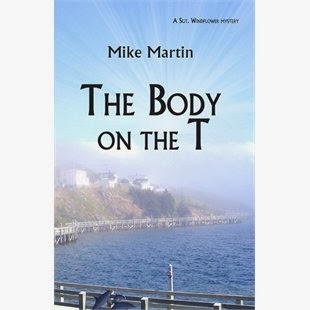
Mike Martin signs his second mystery, THE BODY ON THE T at Brittons, 846 Bank St., 1 p.m. - 3 p.m.

Sat. Nov. 16 -- Erika Chase signs COVER STORY at Perfect Books, 258 Elgin St., 1 p.m. - 3 p.m.

Sun. Nov. 17 -- Sandra Nikolai signs her second book, FATAL WHISPERS at Brittons in the Glebe, 1 p.m. - 3 p.m.

Sat. Nov. 23 -- Barbara Fradkin signs her latest, THE WHISPER OF LEGENDS at Brittons in the Glebe, 1 p.m. - 3 p.m.

Sat. Nov. 30 -- Vicki Delany signs her newest mystery, A COLD WHITE SUN at Brittons in the Glebe, 1 p.m. - 3 p.m.


For a more complete list of book events happening across the country in November, I suggest you visit the Crime Writers of Canada website, always a good place to keep on top of mysterious happenings! www.crimewriterscanada.com

Friday, June 7, 2013

MYSTERY REVIEW

Bonus Interview!
Fradkin’s latest a masterfully-written page-turner


WHISPER OF LEGENDS
Dundurn


By c.b. forrest

An apprentice author takes comfort in beholding the fruits of a life dedicated to the craft of writing. To see P.D. James release one of her best recent works (Death Comes To Pemberly) at the age of 92. To behold as Cormac McCarthy’s writing somehow, almost impossibly, grows closer to the bone as he nears 80. Checked out any James Lee Burke lately?

All of this to say, while Barbara Fradkin is not anywhere near 80 or 90 (like maybe half that – cheques made payable to ‘cb’, thanks), she does have a considerable oeuvre in her Inspector Green mystery series. And so it was a pleasant surprise as a reader to see Fradkin take a big risk and move her protagonist from the known urban environment of Ottawa to the wild and tangled Northwest Territories. And it was an even more heartening as a fellow writer to see her reach a whole new level with Whisper of Legends, the ninth in the Green series (Dundurn Publishers, $17.99).

The premise for the story is every parent’s nightmare: Green’s daughter Hannah goes missing while on a canoe trip to the mind-bogglingly massive Nahanni River (30,000 square kilometres, 600 grizzlies, and countless insects to drive the city boy Green crazy). A canoe believed to belong to her four-party group is found onshore, but the local Mountie detachment isn’t convinced the teens qualify as “missing” yet, and it would be like looking for a needle in a haystack at any rate. Ever the pragmatist, Green decides to do the job himself. He turns to his reliable and longtime friend, Staff Sergeant Brian Sullivan, to accompany him to the Northwest Territories to find Hannah and bring her home.

Things get more tangled than the woods of the Nahanni when Green finds out that Hannah’s boyfriend on the trip has unclear motives for failing to register their expedition with park authorities. The ensuing search allows Fradkin to richly describe the park and the river in turns of phrase that will transport you there to the point where you begin to scratch at imaginary mosquito bites.
‘Green slept fitfully, disturbed not so much by the tandem snoring of the other two men nor the by the eerie grey of the northern night, but by fragments of dreams lurking at the borders of his consciousness.’

Green’s city-boy-goes-wild offers new opportunities for Fradkin to mine the soul of this man and his feelings for his loved ones in new and deeper ways than ever before. After nine novels, that’s saying something about Fradkin’s respect for the reader, her craft, and her protagonist. Green is vulnerable, he has no jurisdictional authority, and so we see the evolution of new thinking and problem-solving from this cop who has supposedly “seen it all”.

The story evolves from a mainstream novel in the first several chapters to a bona fide murder mystery as bodies are discovered and new and very interesting characters are introduced (ie. Elliot the expert tracker) to full effect. There is an unexpected twist ending that again displays Fradkin’s chops in the department of plotting. With Whisper of Legends, Fradkin has written her best work yet and it will stay with the reader like the lonesome call of a loon across a midnight lake.

I managed to catch up with Fradkin for a phone interview while she was on a book tour through the Northwest Territories and Alaska with talented and prolific fellow author, Vicki Delany.


CBF: You took a break between Beautiful Lie The Dead and Whisper of Legends. Did you need to recharge or were you busy with other projects?
BF: A bit of both. I wanted a break because I had something else I wanted to write. Series, even when you enjoy the characters and the place immensely, are constraining. If you want to explore other characters or types of stories, you have to break out. In my case, I wanted to write a biography of my father.

CBF: Taking a series character away from his setting - especially when that setting is an important aspect of the character - is a risky venture. But taking a gritty urban lead out to the middle of the woods is even Riskier. What pros and cons did you weigh when you decided to set the novel in the Nahanni?
BF: None, actually. I just wanted to write the story and I didn't think how risky it might be to the series. I was more focused on how risky it would be to Green, and that was an exciting prospect. Writers are always looking for tension, conflict and novelty, which Green vs. Nahanni had in spades. As I was writing along, I did wonder whether I would lose those readers who enjoy the urban grit and who, like Green, have no interest in wilderness. Time will tell. But I also hope that new readers who passed over the series because of its Ottawa setting will tune in.

CBF: Writing this series represents a significant portion of your adult life. Have you looked way down the road and imagined a time when you wouldn't have an Inspector Green novel on the go?
BF: Yes. I know no series character can go on forever. I don't know when, because I don't plan ahead, but sooner or later Green will run out of cases. But I have a lot of other ideas to pursue, all it takes is courage to break out.

CBF
: You are in Yellowknife right now, and were at Malice Domestic a few weeks ago. What are some of the key ingredients a writer needs in order to be successful?
BF: Wine, actually. And at this point I can only think of three ingredients: perseverance, belief in self, and an independent income stream. Rich spouses fit the bill.


C.B. Forrest’s short story, Hangover At Sunrise, will appear in June’s Alfred Hitchcock Mystery Magazine. He is nearing the completion of an epic saga about modern organized crime whose title he will not divulge though he believes it will be a best-seller translated into twenty-seven languages, including his own.

Friday, March 8, 2013

CRIME ON MY MIND

Springing into new titles!

It's almost spring (I seem to be stuck on a certain theme these days)and the other good news is that the new spring titles have started arriving! There are some criminously delicious new books from Canadian writers that may already be in the stores...so prepare your lists and start shopping!


From the award-winning Mary Jane Maffini comes a brand new cosy series, co-authored with her daughter, Victoria Maffini under the name of Victoria Abbott -- got all that? It's a Book Collector's series, the first being, The Christie Curse. They will be launching this book along with another award-winner, Barbara Fradkin, whose 9th Inspector Green novel, The Whisper of Legends comes out in April. The date for the celebration is Tues. April 16th. See more details under Events.

Just out, The Poisoned Pawn by Peggy Blair. This second fast-paced crime novel brings Cuban police Inspector Ramirez to Canada. And Gail Bowen continues her successful Rapid Reads series with the fourth Charlie D novel, The Thirteenth Rose.

Also new to the shelves, from West Coast authors kay Stewart and Chris Bullock, the third book in their RCMP Constable Danutia Dranchuk series, Unholy Rites. Stay tuned for a review next weekend.

And coming up:

In April, Jack Batten brings his criminal lawyer Crang back into action, after a long hiatus, in Take Five.
Ottawa author David Whellams second Peter Cammon mystery, The Drowned Man, brings the retired Scotland Yard detective to Canada. It appears in May, as does Twilight is Not Good for Maidens, by Lou Allin. Set on Vancouver Island, BC, this is the third in the RCMP Corporal Holly Martin series, the second series for Allin.

And, there are more! Check out the Crime Writers of Canada website at www.crimewriterscanada.com for a listing of all the new cool Canadian crime that's just happened or is on the way!

Happy mysterious reading!


Linda Wiken/Erika Chase

READ AND BURIED
Berkley Prime Crime, now available
A KILLER READ, also available at your favourite bookstores and online.
Nomianted for an Agatha Award, Best First Novel 2012
COVER STORY available for pre-order; coming Aug. 2013.

Wednesday, December 19, 2012

WICKED WEDNESDAYS

A special thanks to readers!


Writing is a partnership between writer and reader. Each brings their past along for the ride. I had a touching experience this weekend that reminded me once again that good things happen when we pay due respect and attention to each other.

I received an email from a reader who is a lover of mysteries and had been enjoying one of my books until he reached a graphic, heart-wrenching murder scene involving children. At this point he threw the book in the garbage and in the email chastised me for the gratuitous, sensationalist, and largely irrelevant scene.

Writers love to receive emails from readers, and although most of them are laudatory, even the critical ones can be very helpful in honing our craft. When we write, we know what we are intending to say, but it is readers who tell us what we actually said. When I receive a critical email I generally thank the reader for their observation but don’t attempt to explain “but what I really meant was…” Words have to stand on their own, and if a reader misses the author’s intent, it is the author’s fault for not communicating it effectively. This is a difficult and humbling but crucial lesson for authors to learn.

In this case, however, I decided to try to explain. Perhaps it was the image of that particular book in the garbage, perhaps it was the obvious distress of the reader. Perhaps it was the fact that 20 children had just been massacred two days before. Or perhaps it was that the reader’s accusation cut too close to the bone for me as a child psychologist.

So I wrote back about the difficulty I had in writing the scene, which was actually based on true events that had haunted me as a psychologist for years. I wrote about its purpose in explaining my detective’s character and his relationship to another major character and also its connection to the overall theme of PTSD in the book.
This prompted him to write about his own experiences and to examine why he had reacted as he did to the scene. I do think it was the worst possible weekend to read that scene, but that too is context that an author can’t control. After an exchange of emails, he took the book out of the garbage and plans to finish it. I don’t know whether he will enjoy it (if enjoy is the right word for a gritty, gut-wrenching book) but I felt much better. The gap between our perceptions had been bridged, we both understood a little better what we had both brought to that scene and how it influenced its meaning for us.

Writing mysteries has its risks. We write about strong emotions and events – rage, terror, despair, human brutality – which can touch readers in powerful, unexpected ways as they relate it to their own experience. I don’t want to shy away from this, because it is why I write. Not simply to entertain but to share an emotional journey. But it’s humbling to be reminded that once my words are out there, the journey the reader takes with them is his alone.

Most of the time, we never know how our words are taken. For this opportunity, and for his willingness to share, I would like to thank this reader, and all the readers who take the time to write us authors with their thoughts. You are our mirrors, you tell us what we have said, and without you we are just tossing meaningless words into the wind.

Merry Christmas, Happy Whatever, and may the new year bring peace, joy and all good things.


Barbara Fradkin is a child psychologist with a fascination for how we turn bad. In addition to her darkly haunting short stories in the Ladies Killing Circle anthologies, she writes the gritty, Ottawa-based Inspector Green novels which have won back to back Arthur Ellis Awards for Best Novel from Crime Writers of Canada. The eighth in the series, Beautiful Lie the Dead, explores love in all its complications. The ninth, The Whisper of Legends is due in April. And, her Rapid Read from Orca, The Fall Guy, was launched last year.

WICKED WEDNESDAYS


Armchair Traveller

Is there anything more spectacular than the Nahanni River in Canada’s Northwest Territories? A world Heritage site and a National Park Reserve, it has some of the most incredible natural diversity and scenery in the entire world. Miles and miles of wilderness with canyons, whitewater, waterfalls, hot springs, lazy, meandering flat water, and ragged glacial mountains. It is home to caribou, grizzlies, swans, eagles, mountain goats and sheep. Brilliant pink wild flowers cling to its gravel shores, while alpine meadows and jagged spruce forests rise up the slopes around it.

Why am I going on like this? Because this is the setting for my next Inspector Green novel. Yes, that’s Ottawa Police Inspector Michael Green, the inner city boy who loves crumbling asphalt and diesel fumes, and who struggles to learn the suburban “dad” skills of mowing the lawn and firing up the barbeque. Inspector Green is going on the Nahanni.

Only one thing could possibly pry him loose from his safe urban world and send him up into one of the last true wildernesses on earth. One of his children has disappeared. His spirited, independent daughter Hannah has gone on a wilderness canoe trip down the Nahanni with a group of friends, and they have failed to show up at their take-out point.

Canoeing the Nahanni has always been a dream of mine, but with the tight timeline of this book and with this summer (not to mention this year’s budget) already spoken for, I will have to content myself with researching from afar. Luckily I have been on a wilderness rafting trip in the Yukon, a very different river and a raft instead of a canoe, but at least I have scanned the distant slopes in search of mountain sheep and watched a grizzly prowl along the gravel shoreline in search of food. I have seen the wild flowers and heard the rush of river current. Along with my research, those memories will have to do.

Does it work? We'll all find out when the new Inspector Green novel, The Whisper of Legends, is released in April, 2013.


Barbara Fradkin is a child psychologist with a fascination for how we turn bad. In addition to her darkly haunting short stories in the Ladies Killing Circle anthologies, she writes the gritty, Ottawa-based Inspector Green novels which have won back to back Arthur Ellis Awards for Best Novel from Crime Writers of Canada. The eighth in the series, Beautiful Lie the Dead, explores love in all its complications. The ninth, The Whisper of Legends is due in April. And, her Rapid Read from Orca, The Fall Guy, was launched last year.