Don’t Lecture - Entertain Me!
The other day, an American interviewer challenged me about the purpose of fiction; should it always contain a moral message? Specifically, should crime fiction?
My instant answer: No No No! The purpose of crime fiction should be to Entertain, and nothing should come before that.
Why? We have countless other venues that preach morality. Religions seek to teach us how to behave. Every day we are bombarded by newspapers, radio and other nonfiction outlets, that expose us to the ‘evil’ of greedy politicians, nasty world despots and out of control celebrities.
If fiction – and crime fiction in particular – was required to follow a moral code, we would miss so much. If the good guy always won – if the bad guy always got caught – wouldn’t that make crime fiction lamentably predictable?
Does that mean crime fiction can’t teach us something? Of course it can! Put me in the mind of a serial killer for a few hours. Let me know what it feels like to experience the overwhelming greed of a con artist. Dress me up as a torch singer, with a black heart and a gun in her stocking.
Let me discover something about how other people think, if only for a little while. But above all else, entertain me. Don’t preach at me, even from a distance. I don’t want it from my fiction. Just tell me a damn good story, thank you. Take me out of the real world for a few hours.
That’s the purpose of crime fiction.
Melodie is the author of Rowena Through the Wall (Imajin Books) a comic time travel novel, and The Goddaughter, a madcap mob caper (Orca Books) to be released in 2012. She has over 200 publications and has won six awards for fiction.
Follow Melodie’s comic blog at http://funnygirlmelodie.blogspot.com/
Showing posts with label writing crime fiction. Show all posts
Tuesday, January 10, 2012
Tuesday, October 18, 2011
TUESDAY BRINGS TROUBLE
New Novelists ---To outline or Not?
The Trouble this Tuesday is this:
What should a first time novelist to do?
Outline before you begin to write or just get on with it & start writing?
If you are seriously considering writing a novel you may have already taken a class from a published author or attended a panel discussion of novelists on the question of “How do you write your story?”
You will have heard about those who never start writing until they have an extensive outline and those who write without a map and ‘find’ the story. While methods vary widely, most writers lean decidedly toward one camp or the other. They’ll tell you it doesn’t much matter which you choose, as long as it works for you.
Terrific. Nice to know there’s no magic formula in a creative art. But here you sit, wanting to write a manuscript. One with a chance of being published and sold. Or perhaps you have a collection of false starts, nicely stored on a disk or lining a bottom drawer, but unfinished. You simply want to finish one book. What do you do?
If you are like me — a struggling first-time novelist — you’re looking for more guidance than, “whatever works for you.” How do I get from the seed of a novel idea to an accumulated 90,000 words and the phrase “The End”?
What known factors can influence the method most likely to deliver you to this goal and positively influence the quality of your end product?
Take some time to consider the following four factors — Personality, Learning Style, Work Habits and Story. Today I’m discussing the first two and will continue the discussion tomorrow. Then see if you can’t “P-L-o-W-S” right through your first draft!
Your Personality:
It’s your turn to make dinner. Do you: a) leaf through store flyers, magazines and cook books to find a new recipe using that week’s sale items and shop from a list of required ingredients; or b) do you wander through the local farmers’ market until a brilliant combination of colour, freshness and available produce suggests a dish you hope will fill the bill for supper that night?
A friend invites you to share a road trip. She wants to set out on a real adventure. Does it a) fill you with deep anxiety not to know where you will sleep each night and that you may miss some vital landmark as you wander about on a whim; or b) your only question is, “Do I need to pack a bathing suit or a snowsuit and how long should I have my newspaper cancelled?”
You’ve been assigned the job of writing the report on your work unit’s latest project. Do you a) Consult with your work mates, take notes and group their comments around common issues and lessons before beginning to draft the report? Or b) Sit down at your desk and pound out a summary of the process, challenges and successes of the last six months in chronological order?
If you answered A to these scenarios, my theory is you will prove to be an ‘outliner’ as a novelist while B answers might suggest you’ll be a ‘fly by seat of your pants’ writer.
Some of us work better with the security of a plan. Knowing where you’ll sleep each night means one less thing to worry about and frees you to enjoy each day’s adventure. Others feel thwarted by too many “thou shalts”. Spontaneity in all matters breeds greater creativity and energy for these folks.
Learning Styles:
Can you recite poetry from memory? Or do you struggle to remember the words, but vividly recall your feelings when you first read it?
Do you prefer to listen to lectures on a topic of interest or to watch a How-To video on You-Tube?
When returning to a friend’s home for a second visit, can you find your way back by visualizing the trip or do you print out the address and directions again?
When you wrote exams, did you use colour-coded crib sheets? Or were five bullet points all you needed to craft your A+ essay question?
People who learn experientially or by a hands-on method may find the “Let’s see where this opening will take us” a more comfortable approach for their writing.
Visual learners and analytical types may want pictures or charts or decision trees to bring clarity to their knowledge retention and thought processes. If this is closer to your style, perhaps you envision writing with a time line pasted up in front of you or bulletin board tacked full of index cards arranged by scene resembling building blocks. Outlining could suit your learning style.
Tomorrow, Wicked Wednesdays will look at personal work habits and the story being written to help novice writers decide whether they are outliners or plowing-ahead writers.
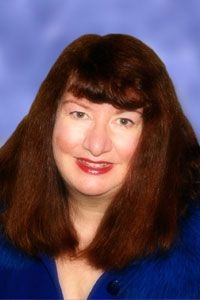
Susan C. Gates is a reformed banker and a recovering policy analyst living in Ottawa. Her works of short crime fiction are published in recent editions of the Ladies’ Killing Circle anthologies. A member of Capital Crime Writers since 2000, Susan has served on its executive. Her first novel, Paper Daughter, has gestated longer than an elephant’s embryo. Well overdue, its delivery promises to be an arduous one.
The Trouble this Tuesday is this:
What should a first time novelist to do?
Outline before you begin to write or just get on with it & start writing?
If you are seriously considering writing a novel you may have already taken a class from a published author or attended a panel discussion of novelists on the question of “How do you write your story?”
You will have heard about those who never start writing until they have an extensive outline and those who write without a map and ‘find’ the story. While methods vary widely, most writers lean decidedly toward one camp or the other. They’ll tell you it doesn’t much matter which you choose, as long as it works for you.
Terrific. Nice to know there’s no magic formula in a creative art. But here you sit, wanting to write a manuscript. One with a chance of being published and sold. Or perhaps you have a collection of false starts, nicely stored on a disk or lining a bottom drawer, but unfinished. You simply want to finish one book. What do you do?
If you are like me — a struggling first-time novelist — you’re looking for more guidance than, “whatever works for you.” How do I get from the seed of a novel idea to an accumulated 90,000 words and the phrase “The End”?
What known factors can influence the method most likely to deliver you to this goal and positively influence the quality of your end product?
Take some time to consider the following four factors — Personality, Learning Style, Work Habits and Story. Today I’m discussing the first two and will continue the discussion tomorrow. Then see if you can’t “P-L-o-W-S” right through your first draft!
Your Personality:
It’s your turn to make dinner. Do you: a) leaf through store flyers, magazines and cook books to find a new recipe using that week’s sale items and shop from a list of required ingredients; or b) do you wander through the local farmers’ market until a brilliant combination of colour, freshness and available produce suggests a dish you hope will fill the bill for supper that night?
A friend invites you to share a road trip. She wants to set out on a real adventure. Does it a) fill you with deep anxiety not to know where you will sleep each night and that you may miss some vital landmark as you wander about on a whim; or b) your only question is, “Do I need to pack a bathing suit or a snowsuit and how long should I have my newspaper cancelled?”
You’ve been assigned the job of writing the report on your work unit’s latest project. Do you a) Consult with your work mates, take notes and group their comments around common issues and lessons before beginning to draft the report? Or b) Sit down at your desk and pound out a summary of the process, challenges and successes of the last six months in chronological order?
If you answered A to these scenarios, my theory is you will prove to be an ‘outliner’ as a novelist while B answers might suggest you’ll be a ‘fly by seat of your pants’ writer.
Some of us work better with the security of a plan. Knowing where you’ll sleep each night means one less thing to worry about and frees you to enjoy each day’s adventure. Others feel thwarted by too many “thou shalts”. Spontaneity in all matters breeds greater creativity and energy for these folks.
Learning Styles:
Can you recite poetry from memory? Or do you struggle to remember the words, but vividly recall your feelings when you first read it?
Do you prefer to listen to lectures on a topic of interest or to watch a How-To video on You-Tube?
When returning to a friend’s home for a second visit, can you find your way back by visualizing the trip or do you print out the address and directions again?
When you wrote exams, did you use colour-coded crib sheets? Or were five bullet points all you needed to craft your A+ essay question?
People who learn experientially or by a hands-on method may find the “Let’s see where this opening will take us” a more comfortable approach for their writing.
Visual learners and analytical types may want pictures or charts or decision trees to bring clarity to their knowledge retention and thought processes. If this is closer to your style, perhaps you envision writing with a time line pasted up in front of you or bulletin board tacked full of index cards arranged by scene resembling building blocks. Outlining could suit your learning style.
Tomorrow, Wicked Wednesdays will look at personal work habits and the story being written to help novice writers decide whether they are outliners or plowing-ahead writers.
Susan C. Gates is a reformed banker and a recovering policy analyst living in Ottawa. Her works of short crime fiction are published in recent editions of the Ladies’ Killing Circle anthologies. A member of Capital Crime Writers since 2000, Susan has served on its executive. Her first novel, Paper Daughter, has gestated longer than an elephant’s embryo. Well overdue, its delivery promises to be an arduous one.
Subscribe to:
Posts (Atom)