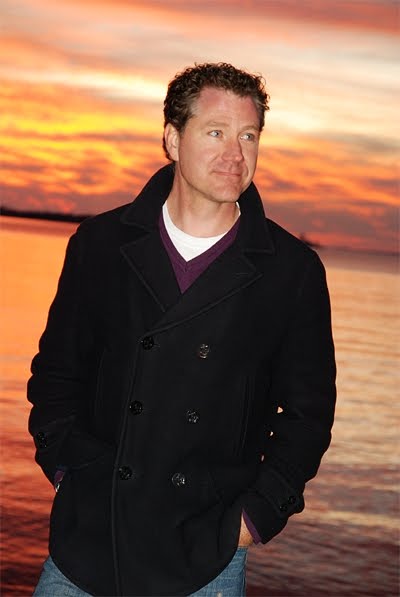
How Close is Too Close to Home?
By Melodie Campbell
It all closed in on me at the launch of The Goddaughter mob caper in Hamilton. Eighty-five people stood waiting.
The local television station had cameras in my face. So far, it had been an easy interview focused on my awards and comedy career. The fellow was charming. I liked him a lot. Then he dropped the bomb.
“So…have you ever met a member of the mob?”
I didn’t like him so much anymore.
Yikes! Hesitation. A lot of feet shuffling.
“Yes.” I said, very precisely. So precisely, that everyone in the room laughed nervously. “In fact, I had to wait until certain members of my family died before getting this book published. ‘Nuf said.”
The ‘nuf said’ was the closure. He got it. Being a smart lad, he even let it drop.
But it made me think about how close you want to get in a book to real life.
As writers, we research a hell of a lot. Of course, I did research for The Goddaughter series. Some of the study was pretty close to home, as I riffed on memories from my childhood. But I write comedies, so perhaps the expectations aren’t as great for me to be entirely accurate. Good thing about that.
In the screwball comedy The Goddaughter's Revenge, I am not very close to real life. Gina must get back fake rings from some of her best clients. So she masterminds a bunch of burglaries that go…well…wrong. It’s great fun, and rather innocent on the grand scale of criminal activities.
But I do cut pretty close to the wire in describing Hamilton. The streets are real. The names of the neighbourhoods are real. I even describe the location of the restaurant where the mob (in my books) hangs out. I changed the name, of course, because the last thing I want is readers thinking this hot resto is really a mob hangout. And besides, it’s fun when fans email me to say, “When they all meet at La Paloma, did you really mean XXX?” Readers feel they’ve been part of an in-joke.
How close is too close? Here’s what I’ve learned. You never want to offend anyone by:
1. Using real names of mobsters past or present. They have ways of finding you. Even the dead ones. We are Sicilian, after all.
or
2. Using a street number that is real and can be tracked down. Especially if you are describing a call girl establishment. Believe me, this is not cool. Mrs. Harmon hated it. Mrs. Murphy, on the other hand…but I digress.
So in The Goddaughter's Revenge, I want you to feel Hamilton. To smell the smoke of Steeltown and experience the ambiance of a post-industrial city in decline. Like parts of New Jersey, The Hammer is rife with delightfully quirky areas that lend themselves perfectly to a mob caper.
I love this city with character. And I hope that comes through in The Goddaughter's Revenge.
Melodie Campbell has over 200 publications and was a finalist for the 2012 Derringer, and both the 2012 and 2013 Arthur Ellis awards. She is the Executive Director of Crime Writers of Canada.
Library Journal says this about Melodie`s third novel, The Goddaughter (Orca Books):
``Campbell`s crime caper is just right for Janet Evanovich fans. Wacky family connections and snappy dialogue make it impossible not to laugh.``
THE GODDAUGHTER’S REVENGE on Amazon http://tinyurl.com/kmgjgsf
THE GODDAUGHTER on Amazon http://ow.ly/dnObH
Follow Melodie’s comic blog at www.melodiecampbell.com
Showing posts with label research. Show all posts
Friday, October 11, 2013
Wednesday, March 21, 2012
WICKED WEDNESDAYS
That "T" word again...
Ah, the marvels of technology. Two things bring this to mind today. There was talk about Tweeting being done from the Arthur Ellis Awards at the end of May, giving up to date Tweets on the celebrations, and in particular the winner's names. I know CBC Books will have someone at the Awards banquet on May 31st doing this. As well, a Crime Writers of Canada member will also send out regular Tweets.
How times have changed. Not too long ago, we had to scour the Arts section of the local paper the morning after to find out the Arthur Ellis news, if not in attendance. And sometimes, it was a very small article. Now, the event is seen as newsworthy and the print coverage is greater. Websites carry the news. Email sends the alerts. And Tweets are only seconds removed from the action. Gotta love it!
Last night at our regular gathering of gals, most from the publishing business, someone remarked about how technology has finally caught up to current times in the mysteries she's reading. I hadn't given it much thought before that but when you look at books published as recently as just three or four years ago, Tweeting wasn't mentioned. Of course, those books were written a good year or two before the pub date. And Tweeting burst on the scene in 2006. So that makes sense.
That means, not only does the writer have to stay on top of emerging trends in publishing -- what the editors are looking for, reading demographics, technology such as e-books and as Michael McPherson mentioned yesterday, KDP Select-- writers also should be aware of tomorrow's 'toys'. Well, to me they are toys as I have a the most basic ever cell phone, a laptop, a desktop computer, and most recently, a Kobo. Not the most technology-savvy person around. I admit it.
It makes the writing life interesting though. How gadget-savvy are your sleuths?
Linda Wiken/Erika Chase
A Killer Read coming April, 2012
from Berkley Prime Crime
www.erikachase.com
Ah, the marvels of technology. Two things bring this to mind today. There was talk about Tweeting being done from the Arthur Ellis Awards at the end of May, giving up to date Tweets on the celebrations, and in particular the winner's names. I know CBC Books will have someone at the Awards banquet on May 31st doing this. As well, a Crime Writers of Canada member will also send out regular Tweets.
How times have changed. Not too long ago, we had to scour the Arts section of the local paper the morning after to find out the Arthur Ellis news, if not in attendance. And sometimes, it was a very small article. Now, the event is seen as newsworthy and the print coverage is greater. Websites carry the news. Email sends the alerts. And Tweets are only seconds removed from the action. Gotta love it!
Last night at our regular gathering of gals, most from the publishing business, someone remarked about how technology has finally caught up to current times in the mysteries she's reading. I hadn't given it much thought before that but when you look at books published as recently as just three or four years ago, Tweeting wasn't mentioned. Of course, those books were written a good year or two before the pub date. And Tweeting burst on the scene in 2006. So that makes sense.
That means, not only does the writer have to stay on top of emerging trends in publishing -- what the editors are looking for, reading demographics, technology such as e-books and as Michael McPherson mentioned yesterday, KDP Select-- writers also should be aware of tomorrow's 'toys'. Well, to me they are toys as I have a the most basic ever cell phone, a laptop, a desktop computer, and most recently, a Kobo. Not the most technology-savvy person around. I admit it.
It makes the writing life interesting though. How gadget-savvy are your sleuths?
Linda Wiken/Erika Chase
A Killer Read coming April, 2012
from Berkley Prime Crime
www.erikachase.com
Wednesday, November 30, 2011
WICKED WEDNESDAYS
It’s All Research!
Life has a way of throwing stuff at you. Some of the stuff is good, like winning the 50/50 draw at a ceilidh, or getting the last parking spot when you have an appointment, or being offered the last piece of double chocolate birthday cake.
Then there is the other stuff, like finding out that you have a strange and crappy hip joint that needs an operation, and that the waiting list is more than a year. Ah, well, such is life. We are supposed to take the good with the bad, and someone somewhere also said that we aren’t thrown more than we can bear in this life. Wonder who that person was?
I have 2 friends who are writers, proper published writers, who like to say, “It’s all research.”
I like that phrase, because it seems to give a purpose to some of that stuff that comes flying my way that I was not looking for, like hip surgery. I have learned that you can expect to have just an epidural at the start of the surgery, no more do they knock you out completely, which I am more a fan of; I know you have to be there when they are carving your hip, but I did not want to be a conscious participant. I learned the different materials that they fashion bionic hips out of these days, strange to think that it is inside making my leg move. I can list off the various physiotherapy exercises that are required for the various stages of re-learning how to walk, climb stairs, and gracefully (and not so) enter a car. I am now intimately familiar with lots of fascinating facts regarding total hip replacement surgery.
I am no expert, you understand, and would not want to be asked to replace the cranky hip of someone else, but I can now blithely hold up my end in excruciating detail on this subject at all the best cocktail parties.
And if ever I would like to write the next great Canadian murder mystery starring a victim of total hip replacement, I will have already done my research personally, and somewhat painfully. So nice to know that this was not all wasted.
I can speak with some authority about some construction materials, such as fiberglass shingles, Vexar fencing and rebar, which I learned from several years of dining with my husband when he sold those products. And although none of my friends would call me a pastry chef in any form of the phrase, after listening to my sister-in-law talk about all of the breads, croissants, fancy ganache cakes, and more that she learned to create becoming a pastry chef grad, I can certainly fake it on this subject in the living room, although sadly not in the kitchen.
Isn’t life fun the way it sends you such varied experiences that change your life, introduce you to more characters, and educate you in subjects that you would never have gone looking for?
I am ready to write with such authority on such a myriad list of subjects now, almost as well as Frank Abagnale Jr in Catch Me If You Can. It is just the actual sitting down to write that I have not yet managed to master.
Catherine Lee (Cathy) is a college textbook buyer in Ottawa, has been a bookseller and book buyer by trade for most of her life, and is a member of 2 book clubs. She became a book lover on her parents’ knees at story time & by flashlight under the bed sheets. One of her greatest pleasures is sharing great books with friends, of course while sipping wine.
Life has a way of throwing stuff at you. Some of the stuff is good, like winning the 50/50 draw at a ceilidh, or getting the last parking spot when you have an appointment, or being offered the last piece of double chocolate birthday cake.
Then there is the other stuff, like finding out that you have a strange and crappy hip joint that needs an operation, and that the waiting list is more than a year. Ah, well, such is life. We are supposed to take the good with the bad, and someone somewhere also said that we aren’t thrown more than we can bear in this life. Wonder who that person was?
I have 2 friends who are writers, proper published writers, who like to say, “It’s all research.”
I like that phrase, because it seems to give a purpose to some of that stuff that comes flying my way that I was not looking for, like hip surgery. I have learned that you can expect to have just an epidural at the start of the surgery, no more do they knock you out completely, which I am more a fan of; I know you have to be there when they are carving your hip, but I did not want to be a conscious participant. I learned the different materials that they fashion bionic hips out of these days, strange to think that it is inside making my leg move. I can list off the various physiotherapy exercises that are required for the various stages of re-learning how to walk, climb stairs, and gracefully (and not so) enter a car. I am now intimately familiar with lots of fascinating facts regarding total hip replacement surgery.
I am no expert, you understand, and would not want to be asked to replace the cranky hip of someone else, but I can now blithely hold up my end in excruciating detail on this subject at all the best cocktail parties.
And if ever I would like to write the next great Canadian murder mystery starring a victim of total hip replacement, I will have already done my research personally, and somewhat painfully. So nice to know that this was not all wasted.
I can speak with some authority about some construction materials, such as fiberglass shingles, Vexar fencing and rebar, which I learned from several years of dining with my husband when he sold those products. And although none of my friends would call me a pastry chef in any form of the phrase, after listening to my sister-in-law talk about all of the breads, croissants, fancy ganache cakes, and more that she learned to create becoming a pastry chef grad, I can certainly fake it on this subject in the living room, although sadly not in the kitchen.
Isn’t life fun the way it sends you such varied experiences that change your life, introduce you to more characters, and educate you in subjects that you would never have gone looking for?
I am ready to write with such authority on such a myriad list of subjects now, almost as well as Frank Abagnale Jr in Catch Me If You Can. It is just the actual sitting down to write that I have not yet managed to master.
Catherine Lee (Cathy) is a college textbook buyer in Ottawa, has been a bookseller and book buyer by trade for most of her life, and is a member of 2 book clubs. She became a book lover on her parents’ knees at story time & by flashlight under the bed sheets. One of her greatest pleasures is sharing great books with friends, of course while sipping wine.
Tuesday, November 15, 2011
TUESDAY BRINGS TROUBLE
Don’t let the web turn you into a lazy researcher
“Literally millions of research man-hours are wasted as a result of errors and inaccurate data contained in reference sources.” - The Internet Accuracy Project
When I worked as a journalist you could still smoke in a little room down the hall from the newsroom (or smoke and drink right in the newsroom if you were pulling the midnight shift). Back then you had to call in and recite your story from a payphone outside the courthouse in order to meet deadline, and there was no such thing as Google to quickly help you round out your story with facts and figures and all sorts of misconceptions, fallacies and denigrations.
Ahhh, the good old days.
We’re not talking the 1920s here with Underwood typewriters, but circa 1993. We had a reference room stocked with phone books for most major cities in North America because there was no such things as 411.com. We worked the phones and we called people, we got wrong numbers, we woke people at all hours, had people yell at us and hang up, and sometimes we got lucky. We left the cocoon of the newsroom and interviewed people in bars, offices, on the street. Being a naturally curious kind of guy (which has gotten me into some interesting situations over the years, but that‘s another blog), I’ve always loved talking to people, asking them questions, piecing together a story by gathering different points of view. The way someone rolls their eyes when they answer a question says more than their words.
I have always enjoyed the research aspect of writing, completely immersing myself inside a new topic, and this has carried over from journalism into my creative writing. And while it goes without saying that the Internet has enriched our lives and allowed us to access a zillion new sources of information that used to require days spent buried in card catalogue drawers trying to decode the Dewey Decimal System, the world wide web has also led to an alarming increase in the writing sins of sloth, plagiarism, and condescension.
Oh, I know what you’re thinking. The web has made it so much easier to round out our crime fiction by Googling things like: ‘what happens to a body if you leave it in a field in the sun for sixteen days’, or ‘types of poison and their detect-ability during autopsy’. A father currently on trial for the murder of his daughters apparently typed “how to murder” in an Internet search engine on his laptop. So yes, it’s definitely handy for research. I’ve used the Internet to re-confirm street grids and routes that my mind’s eye has forgotten, and I’ve also used it to confirm historical timelines for events like the outbreak of SARS in Toronto (for Slow Recoil), and the total number of deaths attributed to the biker wars in Quebec (for The Weight of Stones).
But back to the sins of sloth, plagiarism, and condescension. I have set aside books by some well-regarded authors because they contain page after page of what might as well be verbatim historical “back story”. Readers aren’t dumb; they can detect when a writer has taken the cheap way out and copied and pasted all that stuff about (insert topic here). It makes for boring reading, and readers deserve better. And quite frankly, why are you writing if you simply want to regurgitate a bunch of stuff that you just read? Are you a creative writer or a kid cribbing notes for a Grade 8 public speaking assignment? Vicki Delany’s mystery series about the Klondike gold rush (Gold Digger and Gold Fever) paint an authentic portrait of that stinky and romantic era, the muddy streets and the smell of a dance hall, the language and the diction, without coming off as a forced and awkward history lesson.
My research always involves a variety of tools and approaches. There is ‘hard research’ into those aspects that simply must be correct - the Criminal Code, for example, or how the office of the Crown Attorney works, or the ranks and titles and hierarchy of the police. This should require the consultation of entirely factual and credible sources, not some web page belonging to a 14-year-old kid who stays up way past his bedtime. During the story development phase, when the idea for a novel is coming together in my head, I read only non-fiction books pertaining to the story’s main theme. Even if I don’t refer to a specific event or person from these books, I simply feel better prepared, somehow more authentic in my task, when I sit down to write.
So-called ’soft research’ into the subjective aspects of our world can involve Google searches galore, but nothing can replace first-hand experience. No library books or web searches provided me with a better understanding of the legal system and criminals themselves than sitting in court and covering real trials, interviewing a killer behind prison walls, talking to attorneys in the hallway of a courthouse. It was by getting to know a couple of ex-cons that I came to understand criminal jargon and posturing. An old bank robber told me how ‘keeping six’ means to act as lookout on a job, or that ‘a deuce less’ means that a guy has drawn a sentence of two years less a day - as though he were playing cards with his life.
If you want a real quick immersion into the world of petty criminals, those folks who toil in lives of perpetual desperation, just spend a Monday morning sitting in remand court. It is a sad parade indeed of mistakes, misdeeds, and miscalculations. You will leave with new gratitude for your simple and peaceful life as well as an appreciation for the pessimism and predictability of the criminal law system.
This is one writer who hopes the Internet never trumps my desire to talk to real people, get to know their backgrounds and their strange motivations, ask questions and seek to understand something new about our collective predicament with each book that I am blessed to write.
C.B. Forrest's The Weight of Stones and Slow Recoil were both short-listed for the Arthur Ellis Award. The Devil’s Dust, his third and final novel featuring Charlie McKelvey, will be available May 2012 and has been called “a tour de force“ by two-time Governor General Award winner Tim Wynne-Jones. Research into Forrest’s unbelievable life and times can be conducted entirely online.
“Literally millions of research man-hours are wasted as a result of errors and inaccurate data contained in reference sources.” - The Internet Accuracy Project
When I worked as a journalist you could still smoke in a little room down the hall from the newsroom (or smoke and drink right in the newsroom if you were pulling the midnight shift). Back then you had to call in and recite your story from a payphone outside the courthouse in order to meet deadline, and there was no such thing as Google to quickly help you round out your story with facts and figures and all sorts of misconceptions, fallacies and denigrations.
Ahhh, the good old days.
We’re not talking the 1920s here with Underwood typewriters, but circa 1993. We had a reference room stocked with phone books for most major cities in North America because there was no such things as 411.com. We worked the phones and we called people, we got wrong numbers, we woke people at all hours, had people yell at us and hang up, and sometimes we got lucky. We left the cocoon of the newsroom and interviewed people in bars, offices, on the street. Being a naturally curious kind of guy (which has gotten me into some interesting situations over the years, but that‘s another blog), I’ve always loved talking to people, asking them questions, piecing together a story by gathering different points of view. The way someone rolls their eyes when they answer a question says more than their words.
I have always enjoyed the research aspect of writing, completely immersing myself inside a new topic, and this has carried over from journalism into my creative writing. And while it goes without saying that the Internet has enriched our lives and allowed us to access a zillion new sources of information that used to require days spent buried in card catalogue drawers trying to decode the Dewey Decimal System, the world wide web has also led to an alarming increase in the writing sins of sloth, plagiarism, and condescension.
Oh, I know what you’re thinking. The web has made it so much easier to round out our crime fiction by Googling things like: ‘what happens to a body if you leave it in a field in the sun for sixteen days’, or ‘types of poison and their detect-ability during autopsy’. A father currently on trial for the murder of his daughters apparently typed “how to murder” in an Internet search engine on his laptop. So yes, it’s definitely handy for research. I’ve used the Internet to re-confirm street grids and routes that my mind’s eye has forgotten, and I’ve also used it to confirm historical timelines for events like the outbreak of SARS in Toronto (for Slow Recoil), and the total number of deaths attributed to the biker wars in Quebec (for The Weight of Stones).
But back to the sins of sloth, plagiarism, and condescension. I have set aside books by some well-regarded authors because they contain page after page of what might as well be verbatim historical “back story”. Readers aren’t dumb; they can detect when a writer has taken the cheap way out and copied and pasted all that stuff about (insert topic here). It makes for boring reading, and readers deserve better. And quite frankly, why are you writing if you simply want to regurgitate a bunch of stuff that you just read? Are you a creative writer or a kid cribbing notes for a Grade 8 public speaking assignment? Vicki Delany’s mystery series about the Klondike gold rush (Gold Digger and Gold Fever) paint an authentic portrait of that stinky and romantic era, the muddy streets and the smell of a dance hall, the language and the diction, without coming off as a forced and awkward history lesson.
My research always involves a variety of tools and approaches. There is ‘hard research’ into those aspects that simply must be correct - the Criminal Code, for example, or how the office of the Crown Attorney works, or the ranks and titles and hierarchy of the police. This should require the consultation of entirely factual and credible sources, not some web page belonging to a 14-year-old kid who stays up way past his bedtime. During the story development phase, when the idea for a novel is coming together in my head, I read only non-fiction books pertaining to the story’s main theme. Even if I don’t refer to a specific event or person from these books, I simply feel better prepared, somehow more authentic in my task, when I sit down to write.
So-called ’soft research’ into the subjective aspects of our world can involve Google searches galore, but nothing can replace first-hand experience. No library books or web searches provided me with a better understanding of the legal system and criminals themselves than sitting in court and covering real trials, interviewing a killer behind prison walls, talking to attorneys in the hallway of a courthouse. It was by getting to know a couple of ex-cons that I came to understand criminal jargon and posturing. An old bank robber told me how ‘keeping six’ means to act as lookout on a job, or that ‘a deuce less’ means that a guy has drawn a sentence of two years less a day - as though he were playing cards with his life.
If you want a real quick immersion into the world of petty criminals, those folks who toil in lives of perpetual desperation, just spend a Monday morning sitting in remand court. It is a sad parade indeed of mistakes, misdeeds, and miscalculations. You will leave with new gratitude for your simple and peaceful life as well as an appreciation for the pessimism and predictability of the criminal law system.
This is one writer who hopes the Internet never trumps my desire to talk to real people, get to know their backgrounds and their strange motivations, ask questions and seek to understand something new about our collective predicament with each book that I am blessed to write.
C.B. Forrest's The Weight of Stones and Slow Recoil were both short-listed for the Arthur Ellis Award. The Devil’s Dust, his third and final novel featuring Charlie McKelvey, will be available May 2012 and has been called “a tour de force“ by two-time Governor General Award winner Tim Wynne-Jones. Research into Forrest’s unbelievable life and times can be conducted entirely online.
Thursday, November 10, 2011
LADIES' KILLING THURSDAYS
Sometimes you have to be there!

The internet is a marvelous thing. I don’t know how we ever did research without it. I have almost blocked out the memory of those endless hours spent pawing through the library card catalogue, trying to guess how your subject would be indexed. Or crouching in the aisles of the musty stacks, flipping through obscure books in search of just the exact fact you needed. Why was the most promising book – the one that seemed to cover precisely the topic you needed – always missing?
Nowadays, almost everything is at our fingertips. Even if the information is not online, the library catalogues are, and the right books can be tracked down without even leaving your living room sofa. The maps of many corners of the world are online and Google Earth can even give you a satellite or street view, almost as if you’re standing on the street corner yourself.
Almost, but not quite. Google Street View can’t give you the sounds of the trucks roaring by, or the bass beat from the restaurant patio across the road, or the smell of stale French fries and baking asphalt on a hot summer day. Street View can’t put you in the place, living it in all its layers and textures, any more than a web article can give you the nuances and personal flair of the personal interview.
So it was that my pursuit of authenticity brought me to Schwartz’ Main Hebrew Deli in Montreal. In my latest Inspector Green book, Beautiful Lie the Dead, Green goes to Montreal to track down a cold case, and of course, Schwartz’ is on his to-do list. While in Montreal, I also visited the Mount Royal Cemetery, Summit Circle in upper Westmount, the police station and old Forum, but Schwartz’ and ‘The Main’ were the settings I needed to experience in all their sensory glory. A picture would not capture the arched brow of the impatient waiter, nor the splatter of grease stains on his apron. It would not capture the laughing chatter of the patrons jostling in a long queue outside, renewing old friendships and making new ones. It would not capture the mingled scents of smoked meat, garlic dills, frying oil and coffee that hit you the instant you stepped in the door. Nor the sweet-salty taste of the meat so soft it falls off your fork.
Not all that detail makes it into the book, of course, lest the reader cast it aside half read and leap on the next bus to Montreal. But it’s the best way to sink into the scene and to truly live it from inside the character’s head. The internet and Google Earth make us mere observers, distant and analytical. They are no substitute for getting out there, talking to people and drinking in the whole scene. And a lot less fun!
Barbara Fradkin is a child psychologist with a fascination for how we turn bad. In addition to her darkly haunting short stories in the Ladies Killing Circle anthologies, she writes the gritty, Ottawa-based Inspector Green novels which havewon back to back Arthur Ellis Awards for Best Novel from Crime Writers of Canada. The eighth in the series, Beautiful Lie the Dead, explores love in all its complications. And, her new Rapid Read from Orca, The Fall Guy, was launched in May.

The internet is a marvelous thing. I don’t know how we ever did research without it. I have almost blocked out the memory of those endless hours spent pawing through the library card catalogue, trying to guess how your subject would be indexed. Or crouching in the aisles of the musty stacks, flipping through obscure books in search of just the exact fact you needed. Why was the most promising book – the one that seemed to cover precisely the topic you needed – always missing?
Nowadays, almost everything is at our fingertips. Even if the information is not online, the library catalogues are, and the right books can be tracked down without even leaving your living room sofa. The maps of many corners of the world are online and Google Earth can even give you a satellite or street view, almost as if you’re standing on the street corner yourself.
Almost, but not quite. Google Street View can’t give you the sounds of the trucks roaring by, or the bass beat from the restaurant patio across the road, or the smell of stale French fries and baking asphalt on a hot summer day. Street View can’t put you in the place, living it in all its layers and textures, any more than a web article can give you the nuances and personal flair of the personal interview.
So it was that my pursuit of authenticity brought me to Schwartz’ Main Hebrew Deli in Montreal. In my latest Inspector Green book, Beautiful Lie the Dead, Green goes to Montreal to track down a cold case, and of course, Schwartz’ is on his to-do list. While in Montreal, I also visited the Mount Royal Cemetery, Summit Circle in upper Westmount, the police station and old Forum, but Schwartz’ and ‘The Main’ were the settings I needed to experience in all their sensory glory. A picture would not capture the arched brow of the impatient waiter, nor the splatter of grease stains on his apron. It would not capture the laughing chatter of the patrons jostling in a long queue outside, renewing old friendships and making new ones. It would not capture the mingled scents of smoked meat, garlic dills, frying oil and coffee that hit you the instant you stepped in the door. Nor the sweet-salty taste of the meat so soft it falls off your fork.Not all that detail makes it into the book, of course, lest the reader cast it aside half read and leap on the next bus to Montreal. But it’s the best way to sink into the scene and to truly live it from inside the character’s head. The internet and Google Earth make us mere observers, distant and analytical. They are no substitute for getting out there, talking to people and drinking in the whole scene. And a lot less fun!
Barbara Fradkin is a child psychologist with a fascination for how we turn bad. In addition to her darkly haunting short stories in the Ladies Killing Circle anthologies, she writes the gritty, Ottawa-based Inspector Green novels which havewon back to back Arthur Ellis Awards for Best Novel from Crime Writers of Canada. The eighth in the series, Beautiful Lie the Dead, explores love in all its complications. And, her new Rapid Read from Orca, The Fall Guy, was launched in May.
Thursday, September 29, 2011
LADIES' KILLING THURSDAYS
Reflections on location research
When it comes to trying to capture the sight, feel, smell and sense of a place through words, a writer has a few choices these days. The internet and multi-media has brought much of the world to our fingertips, and we don’t have to leave our computer desk to witness the thrill of a whitewater run or the call of a loon. If a specific piece of information is not on the internet, we only have to pick up the phone. Or fire off an email to a contact found on a website.
Normally I visit all the locations I write about, not only so I can immerse myself in the feel and sense of them but also so I can get my facts right. Savvy Montrealers would have tossed the book at the wall if I had located Schwartz’s Main Hebrew Deli on the wrong side of the street in Beautiful Lie the Dead. I drove around Halifax and rural Nova Scotia, dragging my good friend Mary Jane Maffini with me, in order to get the perfect descriptions for Honour Among Men.
However, my latest Inspector Green book takes place largely in the Nahanni National Park, which is several thousand kilometers northwest of Ottawa, not to mention several thousand dollars out of reach. Not so easy to jaunt off there for a day or two with my notebook in hand. I have relied on websites, Google searches for images and information, the kindness and experiences of friends, and my various contacts who know the North.
Still, there is nothing quite like being there. I would never have attempted to write about the Nahanni if I hadn’t at least visited another wilderness river park in the North for an eleven-day rafting trip. And if I hadn’t done quite a lot of canoe camping and other outdoor adventures. I know I will get things wrong, but I hope I will capture the spirit of the Nahanni with enough power and realism that readers will feel they are there, sharing the awe, the thrill and the terror with my decidedly urban detective.
The past six weeks my sister and I have been traveling around Canada’s Maritime provinces researching a book about our father. We were gathering facts, interviewing oldtimers and researching the history of the places he lived. But the main reason for the odyssey was to walk in his footsteps, to experience the places and the people as he did, to smell the salt air, and to listen to the rush of surf across the rocks and the cry of the gulls when a ship neared port. Photos and videos can’t do it justice, nor can mere words capture the full sense of it. It’s not enough to describe the impressions of the five senses; it is the visceral connection that comes from the totality. That sense of wonder at the rose-coloured dawn over the ocean, or the terror of 100 km. winds tearing across the clifftop.
I hope I can come close to that with my Nahanni book. I will surround myself in images, in memories and descriptions, and I will hope my imagination can take me there. And that the words I come up with will take my readers there as well. It won’t be the real thing, but I hope it will do.
Barbara Fradkin is a child psychologist with a fascination for how we turn bad. In addition to her darkly haunting short stories in the Ladies Killing Circle anthologies, she writes the gritty, Ottawa-based Inspector Green novels which have
won back to back Arthur Ellis Awards for Best Novel from Crime Writers of Canada. The eighth in the series, Beautiful Lie the Dead, explores love in all its complications. And, her new Rapid Read from Orca, The Fall Guy, was launched in May.
When it comes to trying to capture the sight, feel, smell and sense of a place through words, a writer has a few choices these days. The internet and multi-media has brought much of the world to our fingertips, and we don’t have to leave our computer desk to witness the thrill of a whitewater run or the call of a loon. If a specific piece of information is not on the internet, we only have to pick up the phone. Or fire off an email to a contact found on a website.
Normally I visit all the locations I write about, not only so I can immerse myself in the feel and sense of them but also so I can get my facts right. Savvy Montrealers would have tossed the book at the wall if I had located Schwartz’s Main Hebrew Deli on the wrong side of the street in Beautiful Lie the Dead. I drove around Halifax and rural Nova Scotia, dragging my good friend Mary Jane Maffini with me, in order to get the perfect descriptions for Honour Among Men.
However, my latest Inspector Green book takes place largely in the Nahanni National Park, which is several thousand kilometers northwest of Ottawa, not to mention several thousand dollars out of reach. Not so easy to jaunt off there for a day or two with my notebook in hand. I have relied on websites, Google searches for images and information, the kindness and experiences of friends, and my various contacts who know the North.
Still, there is nothing quite like being there. I would never have attempted to write about the Nahanni if I hadn’t at least visited another wilderness river park in the North for an eleven-day rafting trip. And if I hadn’t done quite a lot of canoe camping and other outdoor adventures. I know I will get things wrong, but I hope I will capture the spirit of the Nahanni with enough power and realism that readers will feel they are there, sharing the awe, the thrill and the terror with my decidedly urban detective.
The past six weeks my sister and I have been traveling around Canada’s Maritime provinces researching a book about our father. We were gathering facts, interviewing oldtimers and researching the history of the places he lived. But the main reason for the odyssey was to walk in his footsteps, to experience the places and the people as he did, to smell the salt air, and to listen to the rush of surf across the rocks and the cry of the gulls when a ship neared port. Photos and videos can’t do it justice, nor can mere words capture the full sense of it. It’s not enough to describe the impressions of the five senses; it is the visceral connection that comes from the totality. That sense of wonder at the rose-coloured dawn over the ocean, or the terror of 100 km. winds tearing across the clifftop.
I hope I can come close to that with my Nahanni book. I will surround myself in images, in memories and descriptions, and I will hope my imagination can take me there. And that the words I come up with will take my readers there as well. It won’t be the real thing, but I hope it will do.
Barbara Fradkin is a child psychologist with a fascination for how we turn bad. In addition to her darkly haunting short stories in the Ladies Killing Circle anthologies, she writes the gritty, Ottawa-based Inspector Green novels which havewon back to back Arthur Ellis Awards for Best Novel from Crime Writers of Canada. The eighth in the series, Beautiful Lie the Dead, explores love in all its complications. And, her new Rapid Read from Orca, The Fall Guy, was launched in May.
Wednesday, September 7, 2011
WICKED WEDNESDAYS
The hunt continues!
Continuing on yesterday's theme, I mentioned all the cathedrals we sang in, but we did the tourist thing through many more. Majestic is the only word to describe them. While we do have wonderful catherdals in Canada -- Notre Dame Basilica in Montreal comes first to mind -- there's something about the knowledge that these buildings in France are centuries old that makes it such an awesome experience.
It's easy to get drawn in by the ghosts past. Especially if some classical music is being played or the organist is practicing. Gazing at the many tableaux in a cathedral, the echoes of centuries can be heard. The artwork is amazing. The frescos that adorn the walls, the carved dark woodwork, the massive columns of walls and of course, the numerous stained glass windows and domes that leave one speechless.
A cathedral we wandered through in Nancy was a mass of stained glass windows supported by thin columns of stonework. An amazing structural feat.
Another aspect the cathedrals have in common is the darkness, especially when wandering around the apse, or peering into one of the many recesses along the sides. What better place to hide a body? Or perhaps displayed in the busyness of a tableaux. And if no one's looking, you might be able to wander through a dark doorway, climb narrow stone steps, and find all shapes and sizes of rooms. One wonders if the caretaker checks each of these areas each night.
Notre Dame Cathedral in Paris is NOT an ideal site to stash a body. The long line-up to enter and walk through is watched by keen eyes. Our choir when it sang there, was kept waiting at a side locked gate until we were all accounted for -- all 70 of us. We were then swiftly ushered inside the fenced outdoors and encouraged to swiftly move into a side entrance. When we'd all reached the change rooms, we were given a strict number of minutes to get ready, all were accounted for, then guided once again up the stone stairs to the main cathedral area. When the concert was over, all was done again in reverse. No side excursions were allowed, everyone had to be ready to exit at the same time and out we went.
I've never encountered that before but then again, this is Notre Dame! Besides, there were so many churches and cathedrals around, one would not be at a loss. That is, unless you got caught up in all the beauty of the place...and got caught.
Have you encountered any unusual spots in your travels that would be ideal for the deed?
Linda Wiken/Erika Chase
A Killer Read coming April, 2012
from Berkley Prime Crime
Continuing on yesterday's theme, I mentioned all the cathedrals we sang in, but we did the tourist thing through many more. Majestic is the only word to describe them. While we do have wonderful catherdals in Canada -- Notre Dame Basilica in Montreal comes first to mind -- there's something about the knowledge that these buildings in France are centuries old that makes it such an awesome experience.
It's easy to get drawn in by the ghosts past. Especially if some classical music is being played or the organist is practicing. Gazing at the many tableaux in a cathedral, the echoes of centuries can be heard. The artwork is amazing. The frescos that adorn the walls, the carved dark woodwork, the massive columns of walls and of course, the numerous stained glass windows and domes that leave one speechless.
A cathedral we wandered through in Nancy was a mass of stained glass windows supported by thin columns of stonework. An amazing structural feat.
Another aspect the cathedrals have in common is the darkness, especially when wandering around the apse, or peering into one of the many recesses along the sides. What better place to hide a body? Or perhaps displayed in the busyness of a tableaux. And if no one's looking, you might be able to wander through a dark doorway, climb narrow stone steps, and find all shapes and sizes of rooms. One wonders if the caretaker checks each of these areas each night.
Notre Dame Cathedral in Paris is NOT an ideal site to stash a body. The long line-up to enter and walk through is watched by keen eyes. Our choir when it sang there, was kept waiting at a side locked gate until we were all accounted for -- all 70 of us. We were then swiftly ushered inside the fenced outdoors and encouraged to swiftly move into a side entrance. When we'd all reached the change rooms, we were given a strict number of minutes to get ready, all were accounted for, then guided once again up the stone stairs to the main cathedral area. When the concert was over, all was done again in reverse. No side excursions were allowed, everyone had to be ready to exit at the same time and out we went.
I've never encountered that before but then again, this is Notre Dame! Besides, there were so many churches and cathedrals around, one would not be at a loss. That is, unless you got caught up in all the beauty of the place...and got caught.
Have you encountered any unusual spots in your travels that would be ideal for the deed?
Linda Wiken/Erika Chase
A Killer Read coming April, 2012
from Berkley Prime Crime
Tuesday, September 6, 2011
TUESDAY BRINGS TROUBLE
Do travel & murder mix?
But of course! Not only do they mix, they're hard to separate when you're a mystery writer on holidays. Especially if those you're travelling with know of your penchant for viewing new sites with a mind to murder. They keep asking, "Well, did you find the perfect spot to hide the body?" Often the answer is, yes.
That in a snapshot, is my two week singfest through France. As part of the International Choir, which is our name when the four sister choirs (mine is the Ottawa Classical Choir), 3 from Quebec, are on tour. This year's amazing trip began with an invitation to sing at the anniversary celebrations for the 800 year old Cathedral in Reims. Our repertoire was two masses by Theodore Dubois, a 19th century French composer and a former organist at that church. These two masses have not been heard before. It's a wonderful plot for a mystery -- the scores being discovered by the grandson and his connection to our director.
The Cathedral in all it's ancient splendor was packed. Our performance earned a standing ovation, rare we're told. That was our final concert of the tour but we'd received much the same reception in each of the other cities: Montpellier, Metz and Paris. Even at the famed Notre Dame Cathedral!
But I digress. Each of our stops, including two days in Lyon, allowed for many hours of sightseeing. In steamy hot weather we walked for hours, exploring parts of the old cities (each of these thoroughly modern cities has an old section), drinking in the ambience, enjoying an espresso at a sidewalk cafe, searching for memorable items to bring home. And of course, body dumps.
Waterways are always a great spot to hide a body. And with any luck, decomposition can make it more difficult to ascertain a time of death. With two rivers running through the city, the Rhone & the Saone,there are numerous hidden opportunities. My favourite was at a less active portion of the Saone, with a massive rebuilding project taking over several city blocks on one side and a forested hillside on the other. Few houses across the way but several openings from the traboules, or secret underground passageways where silk, once the largest export of the city, was transported to waiting vessels. These routes were also used by the resistance during World War II. Although many are now populated by tourists, some of those less traversed would be a writer's delight.
And then there are the numerous wonderfully decorated river barges that are now homes on the water. With many gaps between the boats, a little luck, and a body might become entangled and submerged for a useful amount of time.
I'm afraid I'll be submitting you to a travelogue this week. Hope you'll enjoy these marvellous locations and maybe next time you're travelling, a few ideas will pop into mind. After all, a mystery writer's mind is never on vacation. But oh, what a glorious way to do research!
Have you already spotted some ideal locations to hide bodies at your holiday spots?
Linda Wiken/Erika Chase
A Killer Read coming April, 2012
from Berkley Prime Crime
But of course! Not only do they mix, they're hard to separate when you're a mystery writer on holidays. Especially if those you're travelling with know of your penchant for viewing new sites with a mind to murder. They keep asking, "Well, did you find the perfect spot to hide the body?" Often the answer is, yes.
That in a snapshot, is my two week singfest through France. As part of the International Choir, which is our name when the four sister choirs (mine is the Ottawa Classical Choir), 3 from Quebec, are on tour. This year's amazing trip began with an invitation to sing at the anniversary celebrations for the 800 year old Cathedral in Reims. Our repertoire was two masses by Theodore Dubois, a 19th century French composer and a former organist at that church. These two masses have not been heard before. It's a wonderful plot for a mystery -- the scores being discovered by the grandson and his connection to our director.
The Cathedral in all it's ancient splendor was packed. Our performance earned a standing ovation, rare we're told. That was our final concert of the tour but we'd received much the same reception in each of the other cities: Montpellier, Metz and Paris. Even at the famed Notre Dame Cathedral!
But I digress. Each of our stops, including two days in Lyon, allowed for many hours of sightseeing. In steamy hot weather we walked for hours, exploring parts of the old cities (each of these thoroughly modern cities has an old section), drinking in the ambience, enjoying an espresso at a sidewalk cafe, searching for memorable items to bring home. And of course, body dumps.
Waterways are always a great spot to hide a body. And with any luck, decomposition can make it more difficult to ascertain a time of death. With two rivers running through the city, the Rhone & the Saone,there are numerous hidden opportunities. My favourite was at a less active portion of the Saone, with a massive rebuilding project taking over several city blocks on one side and a forested hillside on the other. Few houses across the way but several openings from the traboules, or secret underground passageways where silk, once the largest export of the city, was transported to waiting vessels. These routes were also used by the resistance during World War II. Although many are now populated by tourists, some of those less traversed would be a writer's delight.
And then there are the numerous wonderfully decorated river barges that are now homes on the water. With many gaps between the boats, a little luck, and a body might become entangled and submerged for a useful amount of time.
I'm afraid I'll be submitting you to a travelogue this week. Hope you'll enjoy these marvellous locations and maybe next time you're travelling, a few ideas will pop into mind. After all, a mystery writer's mind is never on vacation. But oh, what a glorious way to do research!
Have you already spotted some ideal locations to hide bodies at your holiday spots?
Linda Wiken/Erika Chase
A Killer Read coming April, 2012
from Berkley Prime Crime
Thursday, July 28, 2011
LADIES' KILLING THURSDAYS
Accuracy?
It used to be that inaccuracies in a book annoyed me. Sometimes if I spotted a number of glaring inconsistencies I didn’t finish the book. The classic example often cited although I have no idea what the book was, is the reference to a character looking out the window of a Newfoundland cabin and spotting a skunk crossing the clearing. The problem - there are no skunks in Newfoundland.
Today the challenge for writers is thousand times greater than it used be. In the past ‘experts’ in particular fields caught errors but most readers didn’t. Today readers with access to the Google or any other search engine can and do read along and say, ‘Hey, wait a minute, I don’t thing that’s right’. Off they go to check. If the author has marshaled the correct information the reader may be pleased to learn something new or gain a new respect for the writer. If the author’s facts are wrong the reader may mutter darkly to herself that although this is fiction the facts should be right.
In the past an author could fudge a lack of knowledge. She did not need to develop a keen curiosity and learn to accept nothing at face value. Now she needs to ask about the origin of a custom or the impetus to develop a product. She needs to question everything but not bog down in the need to know.
But access to a world of information has its hazards. The writer who enjoys research uses Google to delve much deeper into a topic than time and the availability of reference resources would have allowed her to do in the past. Whether the question relates to the medicinal properties of herbs, the ingredients in an arcane Mediaeval recipe or the sequence of events in a long forgotten military battle the information is available and easy to find. She builds files of useful details and then integrates them into her book.
I am reading At Home by Bill Bryson. In this book he uses his own home, an old manse in England, as the starting point to investigate the evolution of the house as we know it and in each chapter he discusses a specific room and how and why it evolved. Who knew that Mrs Beeton, the author of the much lauded book of household management, was celebrated because she included actual measurements of quantities to be used in recipes, something that had never been done before. An entertaining book, it is essentially a treatise in English and American social history. I marvel at the questions he has set himself to answer.
What does the readily available fund of knowledge do for literature? If smoothly woven into the story it adds a depth, a complexity and a convincing reality which pleases readers and takes them deep into the book’s world. If information is troweled on with a heavy hand it slows the pace and bores the reader. It can be a fine line.
The availability of information does allow authors to broaden the scope of their books because, following the adage to ‘write what they know’, they can become armchair authorities on almost any subject.
You have to wonder which fields that authors investigated provided them with the most stimulation and how many authors found inspiration for new books while prowling through the stacks of the internet.

Joan Boswell is a member of the Ladies Killing Circle and co-edited four of their short story anthologies: Fit toDie, Bone Dance, Boomers Go Bad and Going Out With a Bang. Her three mysteries, Cut Off His Tale, Cut to the Quick and Cut and Run were published in 2005, 2006 and 2007. In 2000 she won the $10,000 Toronto Star’s short story contest. Joan lives in Toronto with three flat-coated retrievers.
It used to be that inaccuracies in a book annoyed me. Sometimes if I spotted a number of glaring inconsistencies I didn’t finish the book. The classic example often cited although I have no idea what the book was, is the reference to a character looking out the window of a Newfoundland cabin and spotting a skunk crossing the clearing. The problem - there are no skunks in Newfoundland.
Today the challenge for writers is thousand times greater than it used be. In the past ‘experts’ in particular fields caught errors but most readers didn’t. Today readers with access to the Google or any other search engine can and do read along and say, ‘Hey, wait a minute, I don’t thing that’s right’. Off they go to check. If the author has marshaled the correct information the reader may be pleased to learn something new or gain a new respect for the writer. If the author’s facts are wrong the reader may mutter darkly to herself that although this is fiction the facts should be right.
In the past an author could fudge a lack of knowledge. She did not need to develop a keen curiosity and learn to accept nothing at face value. Now she needs to ask about the origin of a custom or the impetus to develop a product. She needs to question everything but not bog down in the need to know.
But access to a world of information has its hazards. The writer who enjoys research uses Google to delve much deeper into a topic than time and the availability of reference resources would have allowed her to do in the past. Whether the question relates to the medicinal properties of herbs, the ingredients in an arcane Mediaeval recipe or the sequence of events in a long forgotten military battle the information is available and easy to find. She builds files of useful details and then integrates them into her book.
I am reading At Home by Bill Bryson. In this book he uses his own home, an old manse in England, as the starting point to investigate the evolution of the house as we know it and in each chapter he discusses a specific room and how and why it evolved. Who knew that Mrs Beeton, the author of the much lauded book of household management, was celebrated because she included actual measurements of quantities to be used in recipes, something that had never been done before. An entertaining book, it is essentially a treatise in English and American social history. I marvel at the questions he has set himself to answer.
What does the readily available fund of knowledge do for literature? If smoothly woven into the story it adds a depth, a complexity and a convincing reality which pleases readers and takes them deep into the book’s world. If information is troweled on with a heavy hand it slows the pace and bores the reader. It can be a fine line.
The availability of information does allow authors to broaden the scope of their books because, following the adage to ‘write what they know’, they can become armchair authorities on almost any subject.
You have to wonder which fields that authors investigated provided them with the most stimulation and how many authors found inspiration for new books while prowling through the stacks of the internet.

Joan Boswell is a member of the Ladies Killing Circle and co-edited four of their short story anthologies: Fit toDie, Bone Dance, Boomers Go Bad and Going Out With a Bang. Her three mysteries, Cut Off His Tale, Cut to the Quick and Cut and Run were published in 2005, 2006 and 2007. In 2000 she won the $10,000 Toronto Star’s short story contest. Joan lives in Toronto with three flat-coated retrievers.
Tuesday, July 12, 2011
TUESDAY BRINGS TROUBLE
Just open a vein...
I seem to recall some writer using the phrase, opening a vein. I can't recall the name (not unusual for me) but I do remember he or she was talking about how to write with truth and emotion. Digging deep into your psyche and letting it come out through the character.
I'm reading Daggers & Men's Smiles by Jill Downie at the moment, and will be reviewing it this weekend on Mystery Maven Canada. It takes place on Guernsey and involves the making of a film, actors and of course, death. In it, a seasoned actor comments on how a beautiful young actress has developed more depth in her acting after her lover is murdered.
Writers are like actors in that sense. You can fake the setting to a certain degree, relying on research and observation even if you're lacking the sense of place that comes from being raised in a location. You can certainly research all the forensic information you'll ever need to use in a crime novel. But how do you get the characters' real?
Do we have to suffer in our own lives in order to portray a sleuth who's been jaded by events? Can the feelings of grief be evoked and set on the page? Does a writer need a degree in psychology in order to get the characters right?
Or do we try to know our characters so deeply that they react naturally in a scene?
Or is there a tacit agreement between writer and reader that you can keep your veins closed and just write a damn good novel with believable characters, a sharp mystery and a setting that sweeps you away...and all will be accepted?
On the other hand, there's a saying we all use...'it's all research'! So suffer away?
Linda Wiken/Erika Chase
A Killer Read coming April, 2012
from Berkley Prime Crime
I seem to recall some writer using the phrase, opening a vein. I can't recall the name (not unusual for me) but I do remember he or she was talking about how to write with truth and emotion. Digging deep into your psyche and letting it come out through the character.
I'm reading Daggers & Men's Smiles by Jill Downie at the moment, and will be reviewing it this weekend on Mystery Maven Canada. It takes place on Guernsey and involves the making of a film, actors and of course, death. In it, a seasoned actor comments on how a beautiful young actress has developed more depth in her acting after her lover is murdered.
Writers are like actors in that sense. You can fake the setting to a certain degree, relying on research and observation even if you're lacking the sense of place that comes from being raised in a location. You can certainly research all the forensic information you'll ever need to use in a crime novel. But how do you get the characters' real?
Do we have to suffer in our own lives in order to portray a sleuth who's been jaded by events? Can the feelings of grief be evoked and set on the page? Does a writer need a degree in psychology in order to get the characters right?
Or do we try to know our characters so deeply that they react naturally in a scene?
Or is there a tacit agreement between writer and reader that you can keep your veins closed and just write a damn good novel with believable characters, a sharp mystery and a setting that sweeps you away...and all will be accepted?
On the other hand, there's a saying we all use...'it's all research'! So suffer away?
Linda Wiken/Erika Chase
A Killer Read coming April, 2012
from Berkley Prime Crime
Wednesday, June 22, 2011
WICKED WEDNESDAYS
Research, research and then, more research...
Write what you know or know what you write? If you have no choice & it has to be the second option, then research is the answer. Of course, all writers are aware of that fact. Even if you know a topic, there's still something to be learned and then woven into your story.
But if you're setting your mystery in a location, either fictional or real, where you've never traveled, this could be tricky. If you can visit the place, by all means do so. That's the best way to get both a visual and more subtle feel for it. The intangibles, such as how people treat each other, the fragrant smell of a flowering shrub, the angle of the sun in early evening...you can read about these things but once you've experienced them, it will be evident in your writing about them.
If it's a fictional town, I recommend modeling it on a real one. Someplace nearby that you can visit. A town that looks like and feels like the place you're writing about. Then change the street names, the flowers and shrubs (if you're in a totally different growing zone), and of course, the name of the town.
If it's a real place but you can't get there, take heart. Mystery novelist John Spencer Hill who wrote in the mid-1990's, set his two Detective Carlo Arbati novels in Florence, Italy. John, who lived in Ottawa, admitted he had never visited
Florence. But you'd never guess that when reading The Last Castrato and Ghirlandaio's Daughter. Of course, I've never visited it either but when reading the books, I felt transported to Florence and that's what mattered. He did it by reading books about and set in Florence, and using a map. I'm sure he had other methods, too but this was before such things as Google Earth, Streetscape, and the wealth of research information available via the Internet. (Sadly, John died before being able to finish his third novel in the series.)Google also offers wonderful photo albums, such as house styles (I used it for antibellum mansions) and reference pages with images of foliage.
Besides the vast array of information using the Internet, there are bound to be numerous books about the area in question. Your public library is a good source for these reference books and even fiction novels set in your chosen part of the world.I also borrowed a workbook with CD for actors which taught southern dialects. It helps me when creating dialogue to hear that southern lilt in my head.
If you're a member, the CAA is a great source for maps and their popular Tour Books. And, don't forget to use DVDs. Here again, they offer visual and audio cues that help in building your location.
And, don't forget to ask. If you know someone who lives in that region, or can find a friend of a friend...don't hesitate to ask for help. You'll probably find they're dying to talk about their towns.
I'm sure there are a lot of other methods for writers doing research. What have you found useful in research locations?
Linda Wiken/Erika Chase
A Killer Read coming April, 2012
from Berkley Prime Crime
Wednesday, May 18, 2011
WICKED WEDNESDAYS
Why you should always carry a camera!
That was the subject of an email sent to me recently. It had attached a series of really cute cats and dogs, doing the really cute things they do. A lot of them involved sleeping. I'm sure everyone's seen similar pictures in their mailbox at one point or other.
I'm a sucker for these shots. They never fail to put a smile on my face. I wish I could print and frame them all, but I don't have enough wall space. And I'd get too distracted when I should be writing.
But those words stuck with me. Always carry a camera. That's the same advise that one of my favourite authors, Anne Lamott gave in her address to a writer's conference several years ago, and which can be downloaded as an audiofile. It's called Word by Word and I was so impressed, I blogged about it last fall after listening to the audio.What I didn't mention at that point but it flashed into my brain again, was Lamott suggested you should always carry a camera. Take pictures of things that inspire you. Of people's faces. Of children playing. Of architectural details. Of flowers and shrubs. Of rain showers. Of cats and dogs. These pictures are all research. You can take them out and use them as visual prompts in your writing, whether you're using them to describe a person's face at seeing a baby or the porch complete with wicker furniture and a stack of books. Or you can sit and stare at a beach sunset it that's what inspires you to dig deep for that extra emotion in your writing.
Several years ago, on my power walk back to my house early one morning, I walked alongside a small field and forest enveloped in fog. I love fog. Must be my west coast upbringing. Anyway, I sprinted home, grabbed my camera and drove back (I'd had
my exercise after all) to the spot. Not much had changed and I managed to get some atmospheric photos, lying on my stomach on the dewy grass, of cattails and ornamental grasses through a foggy mist that soon became a hazy shaft of sunlight.I had meant to try my hand at painting and those photos would take over where my memory left off. The artwork never happened. Maybe some day because I still have the photos.
I'd forgotten that. But my camera goes into my purse today & will stay there.
Fortunately, it's small. Let the photos begin!Do you find photos a tool in your writing?
Linda Wiken/Erika Chase
A Killer Read coming in April, 2012
from Berkley Prime Crime
Tuesday, May 3, 2011
TUESDAY BRINGS TROUBLE
Write what you want to know.
There is an old adage: Write what you know. I’d like to change that to: Write what you want to know.
I know all about designing computer systems for the banking industry, growing (and
eating) tomatoes, driving long distances, and reading mystery novels. All of which hardly makes for fascinating books. So I set myself to learning what I wanted to write about.
I write a traditional village/police procedural style novel in the Constable Molly Smith series. I have no experience in law enforcement whatsoever. None. The books are set in Canada, in the British Columbia Interior. Thus I am at a disadvantage because as consumers of popular culture we Canadians read British books and watch American TV and some aspects of policing are different here in Canada. Veracity is important to me in my books.
Yet I love police novels in the British vein and that’s the sort of book I wanted to write. Before beginning the first book in the series, In the Shadow of the Glacier, I wrote to the police force in the real life town upon which Trafalgar is based asking for help and got a very positive response. Over the years they have helped me enormously. When I moved to where I now live, I contacted the local police detachment (and gave them a copy of In the Shadow of the Glacier). I’ve since been on police ride-alongs, to watch in-service training, to the firearms range, and even had my own private training session in close quarters combat. I had a lot of fun and learned a great deal about what I wanted to know.
My next book for Poisoned Pen Press is a standalone suspense in the Gothic tradition, tentatively titled Walls of Glass. (Fear not dear reader, Molly Smith will be back). I decided to set the book on an organic vegetable farm because that’s something I’m interested in.
(Wondering how an organic farm can be a gothic setting? You’ll have to read the book.) Now, my tiny tomato patch is nothing at all like a working, viable farm, so I set out once again to find out what I wanted to know. Which is how to run a thriving, small-scale, family farm. I happen to live in agricultural country, and there happen to be a good number of small scale farms near-by. I contacted the farm owners (off season, these are busy people come summer and fall) and spent some very pleasant afternoons touring the farm and talking about the ins and outs of the modern organic food culture. This fits nicely into one of my primary interests these days which is the locovore movement – eating good food grown close to home and supporting local farms at the same time.
The backstory of Walls of Glass concerns Loyalist settlers, i.e. refugees from the American Revolution who settled in Ontario in 1783. This is another topic I wanted to learn more about since I moved to Loyalist county three years ago and so I’m very much enjoying doing the research.
Being a writer doesn’t pay very well, so it’s nice to have unexpected benefits. Like having the opportunity to learn what you’d like to know more about.
The fifth and newest book in Vicki Delany’s critically-acclaimed acclaimed Constable Molly Smith series, Among the Departed, will be released on May 3rd 2011. Vicki is also the author of the Klondike Gold Rush series (Gold Fever) and
standalone novels of psychological suspense (Scare the Light Away, Burden of Memory).
Having taken early retirement from her job as a systems analyst in the high-pressure financial world, Vicki is settling down to the rural life in bucolic, Prince Edward County, Ontario where she grows vegetables, eats tomatoes, shovels snow, and rarely wears a watch.
Library Journal gave Among the Departed a starred review saying: “Her exceptional ability to create characters, both realistic and sometimes creepy, makes this another terrific addition to her outstanding body of work.”
Visit www.vickidelany.com. She is on Facebook and twitter @vickidelany.
There is an old adage: Write what you know. I’d like to change that to: Write what you want to know.
I know all about designing computer systems for the banking industry, growing (and
eating) tomatoes, driving long distances, and reading mystery novels. All of which hardly makes for fascinating books. So I set myself to learning what I wanted to write about.I write a traditional village/police procedural style novel in the Constable Molly Smith series. I have no experience in law enforcement whatsoever. None. The books are set in Canada, in the British Columbia Interior. Thus I am at a disadvantage because as consumers of popular culture we Canadians read British books and watch American TV and some aspects of policing are different here in Canada. Veracity is important to me in my books.
Yet I love police novels in the British vein and that’s the sort of book I wanted to write. Before beginning the first book in the series, In the Shadow of the Glacier, I wrote to the police force in the real life town upon which Trafalgar is based asking for help and got a very positive response. Over the years they have helped me enormously. When I moved to where I now live, I contacted the local police detachment (and gave them a copy of In the Shadow of the Glacier). I’ve since been on police ride-alongs, to watch in-service training, to the firearms range, and even had my own private training session in close quarters combat. I had a lot of fun and learned a great deal about what I wanted to know.
My next book for Poisoned Pen Press is a standalone suspense in the Gothic tradition, tentatively titled Walls of Glass. (Fear not dear reader, Molly Smith will be back). I decided to set the book on an organic vegetable farm because that’s something I’m interested in.
(Wondering how an organic farm can be a gothic setting? You’ll have to read the book.) Now, my tiny tomato patch is nothing at all like a working, viable farm, so I set out once again to find out what I wanted to know. Which is how to run a thriving, small-scale, family farm. I happen to live in agricultural country, and there happen to be a good number of small scale farms near-by. I contacted the farm owners (off season, these are busy people come summer and fall) and spent some very pleasant afternoons touring the farm and talking about the ins and outs of the modern organic food culture. This fits nicely into one of my primary interests these days which is the locovore movement – eating good food grown close to home and supporting local farms at the same time. The backstory of Walls of Glass concerns Loyalist settlers, i.e. refugees from the American Revolution who settled in Ontario in 1783. This is another topic I wanted to learn more about since I moved to Loyalist county three years ago and so I’m very much enjoying doing the research.
Being a writer doesn’t pay very well, so it’s nice to have unexpected benefits. Like having the opportunity to learn what you’d like to know more about.
The fifth and newest book in Vicki Delany’s critically-acclaimed acclaimed Constable Molly Smith series, Among the Departed, will be released on May 3rd 2011. Vicki is also the author of the Klondike Gold Rush series (Gold Fever) and
standalone novels of psychological suspense (Scare the Light Away, Burden of Memory). Having taken early retirement from her job as a systems analyst in the high-pressure financial world, Vicki is settling down to the rural life in bucolic, Prince Edward County, Ontario where she grows vegetables, eats tomatoes, shovels snow, and rarely wears a watch.
Library Journal gave Among the Departed a starred review saying: “Her exceptional ability to create characters, both realistic and sometimes creepy, makes this another terrific addition to her outstanding body of work.”
Visit www.vickidelany.com. She is on Facebook and twitter @vickidelany.
Tuesday, February 15, 2011
TUESDAY BRINGS TROUBLE
It's all research!
As my writing group delights in saying, "It's all research". You're walking along
the slush-covered street and a bus splashes you -- IAR. You get lost on a long drive and find yourself along some unfamiliar, unusual country road -- IAR. You get thrown in jail (although I hasten to state, none of us have) -- IAR.
So, that's the attitude I took the other morning when I leapt out of bed after checking the alarm clock, without glasses. I quietly donned by walking outfit, went into the kitchen for a glass of water, and noted that the clock on the stove hammered home the point that it was an hour earlier than I'd thought. No wonder it was so dark. Oh well, since I was all ready to hit the streets of Fort Myers, just keep going.
I love being out early in the morning when there are few others foolish enough to greet the dawn. Mainly dog walkers and they're a friendly bunch, often to the point of muddy paw prints on my black jogging pants. But that's what washers are for. I didn't meet any of that morning group though. Too early. Just one older gent doing a fast walk along the road, a tiny red light flashing from where it hung from his neck on a chain. We said 'Hi' as we'd done every morning and then I thought, why is he out so early? For the next few blocks I gave him all sorts of drama happening in his personal life. He'd had a late night argument with his wife and was still steaming. He would sometimes awaken in a sweat from a nightmare dealing with his past. He was searching for someplace to hide the body. My point -- IAR.
I decided to cut through a portion of the golf course, a part of my brain remembering tales (possibly tall ones) we'd heard the first time visiting Florida -- stories of the gullies and ponds saturating the course, that had to be culled for
alligators. They'd even been spotted climbing the banks. Now, the only gator I've seen is from an airboat in the Everglades, but of course, I was certain that noise in the underbrush was a hungry alligator about to pounce. I never did find out what it was as I gamely continued my walk.
Then I thought, HDSF, another of our invaluable sayings. How Does She Feel? How did I feel at the point of dread -- could I describe it...could I remember it to add to my novel? IAR.
By the time our home base came into view, the Floridian sky glowed a muted pink. Breathtaking when viewed as the backdrop to a variety of palm trees. Remember the beauty, remember the feeling of awe -- IAR!
Many mornings when my walk is ended, I will have worked though a sticky plot point and/or moved my story ahead, at least in my mind. No such luck today. But I do find there's nothing like an early morning walk to stimulate the imagination.
What gets your brain in over-drive?
Linda Wiken/Erika Chase
As my writing group delights in saying, "It's all research". You're walking along
So, that's the attitude I took the other morning when I leapt out of bed after checking the alarm clock, without glasses. I quietly donned by walking outfit, went into the kitchen for a glass of water, and noted that the clock on the stove hammered home the point that it was an hour earlier than I'd thought. No wonder it was so dark. Oh well, since I was all ready to hit the streets of Fort Myers, just keep going.
I love being out early in the morning when there are few others foolish enough to greet the dawn. Mainly dog walkers and they're a friendly bunch, often to the point of muddy paw prints on my black jogging pants. But that's what washers are for. I didn't meet any of that morning group though. Too early. Just one older gent doing a fast walk along the road, a tiny red light flashing from where it hung from his neck on a chain. We said 'Hi' as we'd done every morning and then I thought, why is he out so early? For the next few blocks I gave him all sorts of drama happening in his personal life. He'd had a late night argument with his wife and was still steaming. He would sometimes awaken in a sweat from a nightmare dealing with his past. He was searching for someplace to hide the body. My point -- IAR.I decided to cut through a portion of the golf course, a part of my brain remembering tales (possibly tall ones) we'd heard the first time visiting Florida -- stories of the gullies and ponds saturating the course, that had to be culled for
alligators. They'd even been spotted climbing the banks. Now, the only gator I've seen is from an airboat in the Everglades, but of course, I was certain that noise in the underbrush was a hungry alligator about to pounce. I never did find out what it was as I gamely continued my walk. Then I thought, HDSF, another of our invaluable sayings. How Does She Feel? How did I feel at the point of dread -- could I describe it...could I remember it to add to my novel? IAR.
By the time our home base came into view, the Floridian sky glowed a muted pink. Breathtaking when viewed as the backdrop to a variety of palm trees. Remember the beauty, remember the feeling of awe -- IAR!
Many mornings when my walk is ended, I will have worked though a sticky plot point and/or moved my story ahead, at least in my mind. No such luck today. But I do find there's nothing like an early morning walk to stimulate the imagination.
What gets your brain in over-drive?
Linda Wiken/Erika Chase
Tuesday, December 21, 2010
TUESDAY BRINGS TROUBLE
Changing Lanes
I charged ahead on my eighth book several years ago, but am still slogging my way along. You’d think that having already written seven mystery novels at the rate of one a year, I’d pretty much know how to crank out another. And relatively quickly. Let me digress . . .
In the late 1970s I slogged through a P.h.D dissertation about early American plays at the time of the revolution. I spent three years doing the research, and another year structuring a data-driven writing project through to the finish. I vowed I’d never do all that work again. Wrong. Ransom My Soul, my mystery novel in progress, is a total change in style and perspective. I gave up writing about private investigators and decided to write a police procedural, using the Tucson Police Department as the role model of a big southwestern city PD. My many friends in TPD have been really helpful giving me interviews, tours, ride-alongs, crime scene tips, everything that TPD encounters in its daily routine. Okay, I thought (three years ago, mind you), now I can just whip this sucker out using the research materials. I never realized until a few months ago that in a major way I’m writing another P.h.D dissertation.
Before, I’d pretty much make up a lot of the plot as I wrote, twice not even knowing how the book would end until I got there. “Facts” were things I dropped in where needed, but never got in the way of writing. Plot came first, facts fit wherever I wanted.
This time, it’s totally different - the facts determine the plot!!
To be honest to my informants, I have to be honest to what they tell me. So in early chapters, when eight people get slaughtered during a home invasion gone terribly wrong, I relied heavily on the exact routines of Crime Scene Specialists and homicide detectives. I then had to follow the bodies to the Pima County morgue, follow the evidence to the brand new TPD Evidence Center, and “visit” one of the criminals in the Sheriffs Office jail. I huddled in a real-life interrogation room, where there are no one-way mirrors (eg, Law & Order style, good for drama, but so out of touch with reality), just sound-proofed walls and a video camera somewhat concealed in a ceiling fire extinguisher.
Result? I’ve re-edited my early chapters seven times because I didn’t have the procedures correct. Never again will I read T. Jefferson Parker or Henning Mankell without acknowledging the skill with which these and other police proceduralists have so carefully assimilated real-life methodologies. Which leads to . . .
. . . another result. Not only did I have to know exactly who did the murders, and why, but the “facts” forced me to continually struggle to correctly link the plot chain with my now-burdensome accumulation of information about cops and procedures. Which leads to . . .
. . . another result. My characters are cops or civilians working in the police department. So I had to “learn” what distinguishes “patrol” from “detective,” “crime scene specialist” from crime lab technician, officers from sergeants and lieutenants all the way up through captains and the higher ranks of command.
Writing with this new style is a lot more fun, but hardhardhard daily slogging. I often wonder how many other writers get so bogged down with facts and procedures to the point where they take major control of the work in progress.
Feels like I’m writing that damn dissertation again.
David Cole is
overcoming five years of procrastinations and is finally attacking his eighth novel, Ransom My Soul - a somewhat bleak novel of home invasions, drug cartels and human smuggling in southern Arizona, tempered (hopefully) with a fine romance and love story. David's short story, JaneJohnDoe.com, is featured in Indian Country Noir (Akashic Press); he's also working on several non-fiction books about law enforcement, including The Blue Ceiling, a compilation of personal stories about women in law enforcement.
Thursday, December 16, 2010
LADIES' KILLING THURSDAYS

What we go through!
Two disparate event occurred today. The twenty-six year-old billionaire creator of Facebook was named Time Magazine’s Man of the Year for revolutionizing how personal information and news are shared around the world.
And on a lesser stage, I wrestled a dinosaur.
I spent the morning at the Library and Archives Canada, reading the 1907 editions of the Western Star, a weekly newspaper from Birchy Cove, Newfoundland. The newspaper was on microfilm, encased on a small spool in a box. First I had to figure out how to load the spool, thread it through the viewer and ensure it would be picked up on the receiving spool. Not since my graduate school days of reel-to-reel film have I had to wiggle reluctant celluloid onto spool. The instructions were on the machine, but the light was so dim and the print so small, that no matter how I tilted my head, I could not get the diagram to focus on the right spot in the graduated lenses of my glasses. So I winged it. And ended up with the newspaper upside down. After much cursing, delivered under my breath since this was a library, after all, I abandoned the diagram, reversed the spools, threaded the tape backwards and then ran the whole thing in rewind.
Triumph. A mere fifteen minutes in, I was looking at the first available page (April 1907) of the Birchy Cove Western Star on a screen of tiny, pale print. The middle
By the time I had ploughed through two months, I was tiring of Dr. William’s Pink Pills, and those of his rivals, as well as the endless tedious reports of the Newfoundland House of Assembly. I really only needed to know information about the slate quarries and the Grand Falls pulp mill, or news of the family of Thomas Currie, my grandfather. But microfilm offers no search option. No way to distill my essentials from this background chatter of the times. My head ached, my eyes burned, and my neck had a crick from trying to see to the top of the screen.
So I went home, knowing that I would be back, because I had several years of newspapers to skim through, not to mention many other period sources to read. They afford a wonderful glimpse into another time. An essential gift of authenticity for a writer. And yet I felt a strong yearning for the good new days.
The days of the internet, with information and search options at one’s fingertips. The days of Google, of searchable sources, of Facebook. Perhaps today Thomas Currie would have a Facebook page on which he would share personal updates and family photos, giving me much easier access to his life than I can obtain by squinting through the “Personal Mention” columns of the Birchy Cove Western Star. Circa 1907.
But whoever said the life of a writer was easy?
Barbara Fradkin is

a child psychologist with a fascination for how we turn bad. In addition to her darkly haunting short stories in the Ladies Killing Circle anthologies, she writes the gritty, Ottawa-based Inspector Green novels which have won back to back Arthur Ellis Awards for Best Novel from Crime Writers of Canada. The eighth in the series, Beautiful Lie the Dead, which explores love in all its complications, is hot off the press.
Subscribe to:
Comments (Atom)