Wednesday, March 9, 2011

WICKED WEDNESDAYS


I have always been a glass-half-full kind of person – especially if the glass is a wine glass. Those who see the glass half-empty have been sounding the death knell of books and bookselling for almost as long as I can remember now.

Bookselling is not the same as it used to be, that’s for sure, but it’s also nowhere near dead and gone. It’s just different. That March wind outside your frosted window this morning is also a wind of change. And, as a book lover or as an author, if you tap into that difference or change, well, really, the sky’s the limit.

Independents have closed down, chains have grown, on-line businesses have emerged, and books have appeared at the drugstore and grocery store. Some of these changes have been very painful to watch and some surprising. But as in many kinds of changes, it can also mean more opportunities – or at least some different ones.

More years ago than I can comfortably count using all of my fingers and toes, I started in the book business, working as a bookseller and manager for one of the big chains, which wasn’t so big then or seen as so evil, and then much later switched to another chain as a manager and buyer.

Even when there were sales reports and payroll to do in the office, the highlight of every day was being on the sales floor chatting to customers and being asked for a book or author suggestion. And I remember stealing one great idea to put out bookmarks that said, “If you like Sue Grafton, then you’ll like these 3 authors too.”

My favourite job was a busy airport location, where customers had limited pre-flight time to grab an interesting book before inching through security. So many of these frequent flyers were huge readers and of discriminating taste. (I thought they were discriminating, as they took my suggestions!) There is nothing more satisfying to a real bookseller than a return customer begging for more, “Loved the L.R. Wright, what else can you suggest?”


So what does a budding author do, with so many of the small, friendly neighbourhood bookstores rapidly disappearing, and with them those traditional experts at handselling one by one, their new favourite mystery? And what does a booklover do who counted on those same experts to connect them to their next author discovery?

Handselling is still around, it is just dressed differently. Instead of having so many bricks and mortar destination choices to discover the next Cold Mountain or Angela’s Ashes in, we just need to see things differently.

Years ago, several of us book types attended a Parliament Hill literacy fundraiser. While the rest of us were sipping the free champagne and ogling the array of political and literary celebs, our budding mystery author friend was charming and working her way around the room while collecting MPs and Heritage Ministers. As Randy Jackson would say, “And that’s how it’s done!” There are opportunities everywhere; the key is to see them and to recognize them, even to create your own buzz.

Women are astonishingly good at doing this, as we love to get together, to form groups, to sip wine and share the scoop, and really to find any excuse to get out and to get together. We form book clubs, work groups, sports groups and social groups (I belong to The Pink Bra Society, a great example, as it is a glorified reason to eat all the food groups, sip wine together & laugh. Also to exchange books).

And readers find each other on-line as well, on places like Good Reads, the Word-of-Mouth page on Book Reporter, Facebook, and even Oprah’s Book Club. Through all of these groups, readers share a new found author or book discovery, and it then spreads like wildfire. That is how The Secret Daughter became a Canadian bestseller. Word of mouth is a powerful thing.

I recently invited a diverse group of friends from my book club, from work, and from my neighbourhood, to my second annual Author Evening. I invited my mystery author friend, who now has many published books under her belt, to come and speak and read to my friends while we all sipped wine and nibbled dessert (we fed my friend too!). She struck a chord, signed her books and made connections with each of the women present, and some went home to read late into the night in the excitement of discovering a new author.

It is the savvy author who can network their books through the use of all of these new and perhaps not-so-new ways of connecting those who write with those who love to read. So sit back, put your reading glasses on and fill up that half-full glass of wine. That March wind of change is bringing spring with it and all of the newness of life and new books that it always brings.


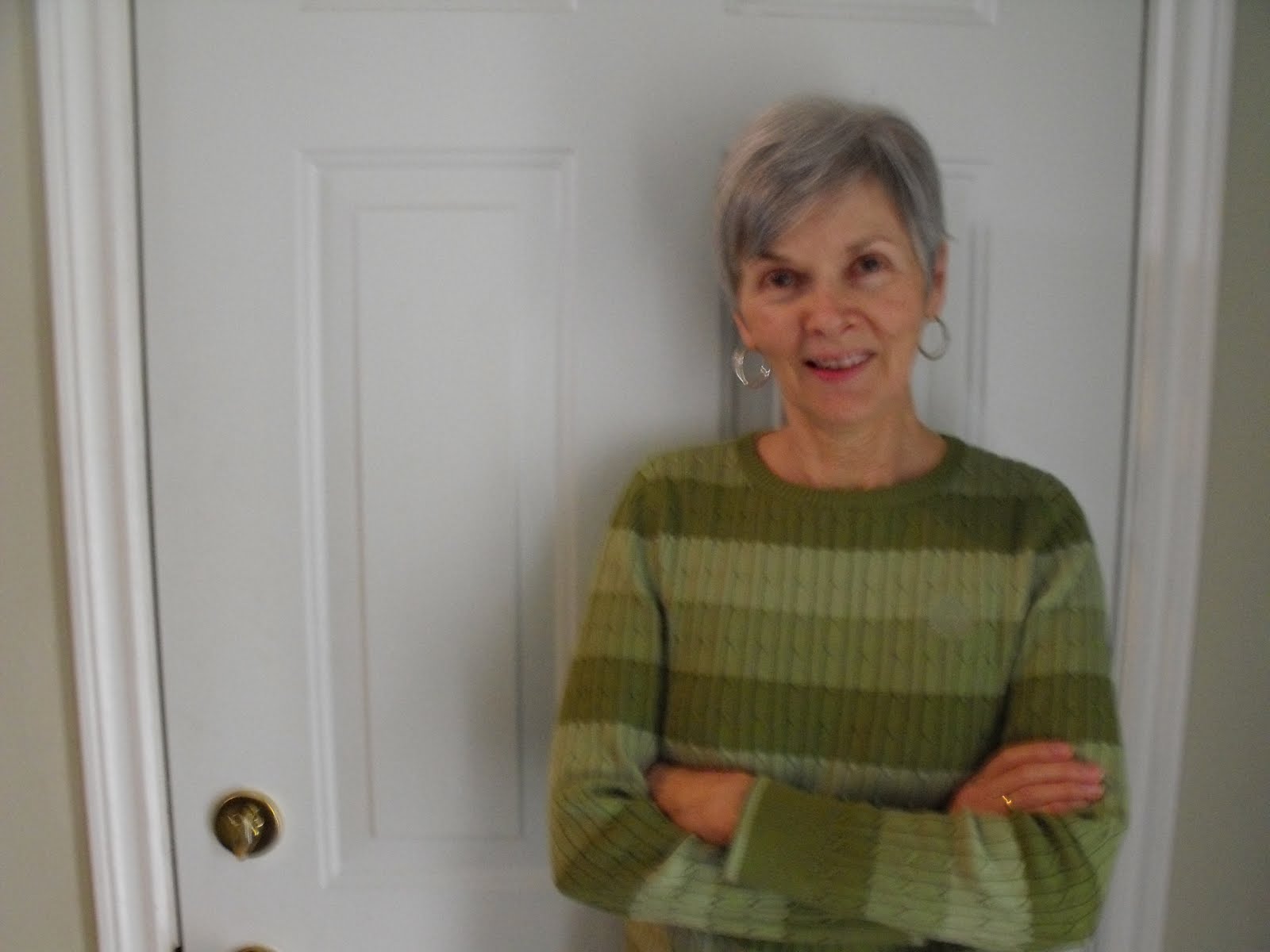
Catherine Lee (Cathy) is a college textbook buyer in Ottawa, has been a bookseller and book buyer by trade for most of her life, and is a member of 2 book clubs. She became a book lover on her parents’ knees at story time & by flashlight under the bed sheets. One of her greatest pleasures is sharing great books with friends, of course while sipping wine.

Tuesday, March 8, 2011

TUESDAY BRINGS TROUBLE

If I’d known then what I know now

When I set out to write my first novel, The Cold Light of Mourning, I had no idea where the journey would lead and I was very surprised, in 2009 to find myself a published author.

I was so focused on the writing and getting published aspect of the process, I hadn’t considered what would or should happen next – the promotion part. And this is odd because I teach public relations at Humber College, so you’d think if anybody should have been aware of the marketing/PR aspect of book publishing it would be me. But I hadn’t really thought that far ahead. (And now that I’ve got that bit worked out, I find it challenging to promote myself. I feel uncomfortable with tooting my own horn. Seems wrong, somehow, and yet the authors who are very, very good at it are the ones whose books sell very, very well.)

Here’s what else I didn’t know until after my book was published:

- That conferences could be so much fun
- That other authors would be so friendly
- That there are so many wonderful mystery books to discover


I attended the Malice Domestic conference in Washington, DC for the first time in 2006 and that opened up a whole new world to me. It was an amazing experience to be in the company of so many like-minded people – everyone there a fan of the traditional mystery as typified by the works of Agatha Christie. Pen and notebook at the ready, I sat in on as many sessions as I could, listening to authors I’d never heard of but have since come to know very well, discussing various aspects of the craft of writing mysteries. I learned a lot.

Three years later, I was there again, this time as a published author. It felt strange taking my place for the first time at an authors’ table as part of a panel sharing my thoughts on the craft of writing mysteries. It was even stranger sitting with prominent authors and being treated as an equal. It amused me during a conversation with Julia Spencer Fleming to remember that her latest book was actually at home on my bed. I’d been reading it before I came to the conference and now here I was sitting with the author.

Since then, I’ve attended other conferences, too: Bloody Words in Toronto and Ottawa, Bouchercon in San Francisco and Love is Murder in Chicago. They are such great fun and a highlight of my year, it’s amazing to think that a few years ago I never knew they existed.

At these conferences I have met wonderfully supportive authors. You’d think there would be a lot of jealousy and competition, but if there is, it’s well hidden.

These authors have been generous and gracious: I won a hat donated by Katherine Hall Page, got some great tips on re-writing from Donna Andrews, had wonderful meals with Mary Jane Maffini, and was rescued by Louise Penny at an event when the questions were flagging.

My foray into mystery writing has brought me into the orbit of so many wonderful writers I didn’t know before, and that means I’ve also been introduced to their work. My side tables groan under the weight of to be read books, all unknown to me just a few years ago.

If I’d known then, what I know now, I’d have written that first book 20 years ago.


Elizabeth J Duncan’s first novel, The Cold Light of Mourning, won the William F. Deeck- Malice Domestic 2006 Grant for Unpublished Writers and the 2008 St. Martin’s/Malice Domestic Award for best first traditional mystery. It was nominated for an Agatha Award (US) and Arthur Ellis Award (Canada). Her second novel in the Penny Brannigan mystery series, A Brush with Death, will be released in paperback in April and the third book in the series, A Killer’s Christmas in Wales, will be published in the fall of 2011.
@ElizabethDuncan
elizabethjduncan.com

Monday, March 7, 2011

MAYHEM ON MONDAY

Maybe there should be a forty-eight hour day!

There’s a lot of responsibility to writing a book. For one thing, you have to take care of all those characters. That’s right. You think it’s easy? Never mind, keeping them from being killed, you also have to make sure they eat and, trust me, most amateur sleuths are light on kitchen skills and never seem to keep to a schedule. They can miss meals for days.

You may even have wake them up in the middle of the night to go skulking after clues and you should encourage them to upgrade their skills (firing range, computer hacking, and running, always with the running). Their dogs have to be fed and walked. Who do you think remembers that? And if the dogs don’t get out often enough, you will get mail. Believe me.

It’s like being a mom to a gang of kids who will never become adults. You’re always going to be getting notes from their teachers.

Worse, you have to meddle in their love lives. Can’t have a mystery character be too happy. Or too lonely. Too anything really.

But one of the most time-consuming tasks is making sure they’re dressed properly. Remember Kinsey Milhone’s all-purpose black dress? Most people do. Readers notice these things.

My point is that, aside from the time it takes to keep your own wardrobe and closet in order and make sure you don’t show up at a business meeting in cargo shorts, now you have all these other people to worry about. I have to make sure Alvin Ferguson’s nine visible earrings are shiny enough to twinkle in the light. Mrs. Parnell still hangs on to her CWAC uniform. It’s hanging in her closet. That’s my responsibility too. As for Camilla MacPhee, she’s impossible. Couldn’t care less about clothes. I leave managing her outfits to her three perfectly groomed sisters.

But I do have to replace Fiona Silk’s one good outfit when it gets ruined by some villain in each book. I still mourn the loss of that periwinkle suede skirt and matching blouse. Then there’s Charlotte Adams, that little fashion plate. If it wasn’t for InStyle magazine (now a tax-deduction), I wouldn’t have a hope of having her look her spiffy best (with just the right shoes) as she gets chased on the I-90 or tossed into a dumpster. A lot of those outfits have to be discarded after a book! They’re ruined.

Her friend Jack Reilly is easier, except for bike racing gear from time to time, he’s always with the Hawaiian shirts and the unsuitable cargo shorts no matter what the weather. Even so, the patterns on the Hawaiian shirts have to vary. Jack may be in a rut, but he does change his clothes. Can’t have potential love interest being too grubby you know.

All to say, when I started out in this business, I had no idea there’d be all this work keeping other people dressed. Maybe that’s why I’m behind on my own laundry. There’s not enough time in the day.

What about you? How do you like a sleuth to be dressed? Do you care about that sort of detail as a reader or as a writer?


Mary Jane Maffini rides herd on three (soon to be three and a half) mystery series and a couple of dozen short stories. Her thirteenth mystery novel, The Busy Woman’s Guide to Murder (April 5, 2011), is brimming with names, no two the same.

Friday, March 4, 2011

CRIME ON MY MIND

Learning to say 'no'!

I've always been a volunteerer. Not that it's a word. It's more like an inner drive to get involved and hopefully, be doing something that will be of some help in the community.

I've volunteered with PTA's, Community Service Boards, Health Boards, Crime Prevention Boards, libraries, community newspapers, choirs, writing associations, Ottawa Police Service, and even, children's soccer leagues. In fact, I being a volunteer co-ordinator was part of my job description -- a real paying job -- at one point in my work life.

And then there came a time I had to learn to say 'no'. It was the hardest word to learn but one that needed to be said from time to time. If only to save my sanity. It's all too easy to get spread too thinly and eventually feel you're not doing a good enough job in any area. So, the paring back began and while I'd been hoping to expand again now that I'm not working out of the house, I'm still having to say 'no'. This writing gig is really a full-time commitment, isn't it?

But part of being a mystery writer is being involved in promoting self and genre. And that's where involvement in the writing community comes in. It's all too easy to sit back and say, "I don't have time, I have a deadline." or, "I've already done my bit.", when the answer should be, "I'll do what I'm able to do."

There's been much discussion lately about Crime Writers of Canada, the national association that's working hard for mystery and crime writers, and oh so necessary in this time of publishing industry upheaval. Crime and mystery authors seldom get the respect, nor the corresponding piece of the promotional pie. While reviewers such as Margaret Cannon, Jim Napier, and Don Graves are gamely getting the word about just how good Canadian mystery writing can be, out to the masses...it's still the main task for the writers themselves, once the book's been written.

Crime Writers of Canada needs members. There are still an awful lot of published authors who haven't yet signed on the dotted line with CWC. Maybe you think there's nothing they can do for you. Maybe you're right...at this point but by joining, you can add your issues to the agenda and, you'll add your voice to those already there, and there's power in numbers. And, in promoting the visibility of mystery and crime writers in Canada, there's bound to be some increase in your readership, too. Unless, you feel you've got the numbers already.

For those who are already members, you need to step up and volunteer! There's always something to do -- Board elections are coming up, committees need help, events are being planned. Do as much or as little as you feel you can. But, please do something.
I'm going to switch off my 'no' button for CWC. It's here is black and white. No backing out. But it's a cause I feel to be a worthy one.

There's a role for readers, too. Read Canadian mysteries! There are some terrific writers across this country, who combine spinning a good tale with capturing our country and all it's complexities and values. And then, tell others about these wonderful reads. Spread the Canadian mystery writing word.

So, what will you say 'yes' to, today?


Linda Wiken/Erika Chase

Thursday, March 3, 2011

LADIES' KILLING THURSDAYS

Critiquing Part 2

Recently the four women in my writing group sent me detailed critiques of the manuscript of my fourth book, Cut to the Bone. I set to work reading each one, evaluating the comments and, when a significant change had been suggested, thinking about the ramifications of the change.

Surprisingly the changes I made led me to reconsider the characters, to eliminate two and to concentrate on deepened the feelings and reactions of those who remained. As I did this I visualized each one scene by scene and this in turn suggested other changes. It was a fascinating experience and it would not have been possible without the initial critiques.

Why did this happen? I think it was because I was forced to rethink the role each character played and doing this made me reconsider each one’s part in the book. Being a visual artist as well as a writer I saw them in their settings and this made them even more real than they had been before.

All this was done on the computer. The next step was to print the new version and read it. Hard copy brings its own pleasures and again I found a multitude of contradictions, omissions and repetitions that I hadn’t picked up on the computer.

The final step was to read the entire ms aloud. The ears recognized problems that the eyes missed so there were more changes to be made.

Perhaps I’m not enough of a self critic but without the initial input from my four patient readers none of this would have happened. As it is I’m sure the editor will find more things to change but not nearly as many as there were in the beginning.

For me the critiquing process is unbelievably helpful. I know that many writers have internalized all the questions they should ask and don’t need to have others read their work. I’m not there and although I’d like to think I will someday have confidence that I don’t need critiques I don’t really believe it.

Are other writers as reliant on critiquing as I am? It would be interesting to know.


Joan Boswell is a member of the Ladies Killing Circle and co-edited four of their short story anthologies: Fit toDie, Bone Dance, Boomers Go Bad and Going Out With a Bang. Her three mysteries, Cut Off His Tale, Cut to the Quick and Cut and Run were published in 2005, 2007 and 2007. In 2000 she won the $10,000 Toronto Star’s short story contest. Joan lives in Toronto with three flat-coated retrievers.

Wednesday, March 2, 2011

WICKED WEDNESDAYS


Practice makes perfect....

I don't know how many times I heard that phrase growing up. Practice makes perfect. Half-an-hour of music each day, practice your cursive writing, arithmetic tables, reading skills, table manners, ice skating...it's what we're told to do in order to get ahead.

Some of it paid off. And for that, I thank my parents. Although I still grumble that I didn't get to take ballet at an earlier age. Or piano. Or join the basketball team. Grumble, grumble.

These days, the same tenet still holds. Practice makes perfect (a state still being sought and slightly out of reach in most, okay, all instances.) But I try to get a half hour of practicing my choir music in every day; I practice tidying the house as I go along rather than leaving it all to one day; ditto for doing the filing.

It's also important with writing. For some reason, book number two in my mystery book club series, is harder to write. I just am having a more difficult time getting into it...or my character's head. I'm not really sure what that's all about. But I do know that if I practice writing each day -- at least 15 minutes -- it helps.

I know the end product will be more disjointed than I'd like. But that's what second drafts are for. I enjoy the process of reading through and adding the details, fleshing out the southern Alabama town and the lives of the book club members. Of being 30-something Lizzie Turner and seeing the world through her eyes. There is hope. I know I'll get back into the groove. She's waiting there for me in that second draft.

I'd heard about the 15-minute rule before but it had to be a thousand words or nothing for me. And that demand one makes on oneself can be debilitating. My advice to self is, back off, visit with Lizzie and friends for at least 15 minutes a day (it can be done even with a busy schedule), make time for friends.

Practice can lead to a day like Tuesday when I glanced at the clock mid-afternoon, not quite sure what day it was, and noticed my 15 minutes had morphed into 10 pages.

What advice do you give yourself when writing?


Linda Wiken/Erika Chase
MURDER BY THE BOOK, first in the mystery book club series
Berkley Prime Crime (April, 2012)

Tuesday, March 1, 2011

TUESDAY BRINGS TROUBLE

Dichotomy: di’chot’o’my
Def: Something with seemingly contradictory qualities

Look at all the author photos on this blog. We all look so nice. Smiling, friendly, nice Canadians.

And yet we are compelled to write crime fiction.

I was recently interviewed by US thriller author – and pal -- Keith Raffel for The Big Thrill e-zine. http://www.thebigthrill.org/2010/12/indefensible-by-pamela-callow/
His final question to me was why Canada produces such terrific crime writers.

Of course, like any good Canadian, I attributed it to our long, cold winters.

I think there could be an element of truth to that.

But what interests me is why the question was asked. Do we Canadians seem too nice to write dark stories?

When DAMAGED (MIRA Books), the debut novel of my legal thriller series, was released in June, the fact I had written a dark, suspenseful thriller with a serial killer known as the Body Butcher took many people I knew by surprise. I was the neighborhood mom, class mother, soccer team manager, field trip chaperone - the list goes on.

Several weeks after my book came, one of my fifteen-year-old neighbours called me. “Pam, I read your book! It was sooo good. And creepy!” she exclaimed, her voice breathless. Then added, “Oh my gosh, I thought you were this nice mom!”

Of course, my immediate reaction was that of a mom – some of the scenes were written in the killer’s point of view, and were rather disturbing. “Do your parents know you read it?” I asked.

After being assured they did, I was able to joke with her about it. But I’ve had a number of people make this comment to me. My homicide detective swears. My main character, in a moment of emotional distress, drops the F-bomb. People were shocked that I would use that language. “We’ve never heard you swear like that, Pam!” I explain that these are my characters. They are in extreme situations. “Gosh” doesn’t seem to cut it. Sometimes, when I’m being mischievous, I add, “You don’t know what I say in my head.” That often elicits a nervous chuckle.

And that is what seems to be unsettling. I seem like a nice mom. (And I am! Really! Trust me…) Yet I write about dark, disturbing crimes. The dichotomy of perception versus reality. It is a theme I explore in INDEFENSIBLE, the second book of my thriller series. Kate Lange, a lawyer at a prestigious law firm, has just survived a very traumatic event that occurs at the end of DAMAGED. She’s suffering from post-traumatic stress syndrome, but to the world, she’s a minor celebrity. Then the ex-wife of the managing partner of Kate’s firm is found dead. The evidence stacks up, and he is charged with her murder. Again, perception plays a role in how the credibility of the evidence is weighed by various characters, including managing partner Randall Barrett himself. He also grapples with the perception of his own identity, as everything by which he defined his life – his profession, his career, his social status – crumbles beneath him.

I have been asked in interviews why I write crime novels. When I read about a crime in the newspaper, I often wonder what I’d do in that situation. And I believe that is why many readers love this genre. Crime novels allow readers to experience the gray area that exists between the black and white of the rule of law.

That is why my main character, Kate Lange, has no particular crime-solving skills. She’s not a detective. She is not a Crown Prosecutor. She is just an ordinary woman thrown into an extreme situation (more than once) and has to use her smarts and her willpower to survive. She has to figure out the cost of doing the right thing.

And why do Canadians produce terrific crime fiction, as my pal Keith Raffel asked? Perhaps because our laws reflect this need to weigh the cost to the individual versus the public of doing the right thing – and we Canadians have many cold winter nights to speculate on what would happen when those laws are violated…

What do you think?


Inspired by a US tissue harvesting case, Pamela Callow wrote DAMAGED, her debut novel and the first book in her legal thriller series for MIRA Books. Pamela drew on her experience working in a blue-chip corporate environment to create series lead Kate Lange, a struggling thirty-something lawyer. DAMAGED was a Levy Home Entertainment June “Need to Read” Pick, with Top Ten Bestseller placement. In INDEFENSIBLE, book #2 of the Kate Lange thriller series, the managing partner of Kate’s firm is accused of domestic homicide – and his defense lies in the hands of the one person who knows too well the taint of criminal scandal: Kate Lange.
Prior to making writing a career, Pamela worked as a strategy consultant for international firm Accenture Consulting. She is a member of the Nova Scotia Bar, and has a Master’s degree in Public Administration.
Pamela lives in Nova Scotia, along with her husband, two children and a pug. She loves to go for walks (unlike her dog), drink coffee, and is currently working on the next two books of the Kate Lange thriller series, and a short story for the International Thriller Writers THRILLER 3 anthology. You can find Pamela at her Facebook Book Page http://www.facebook.com/pages/Pamela-Callow/ , twitter http://www.twitter.com/ , or contact her via her website http://www.pamelacallow.com/